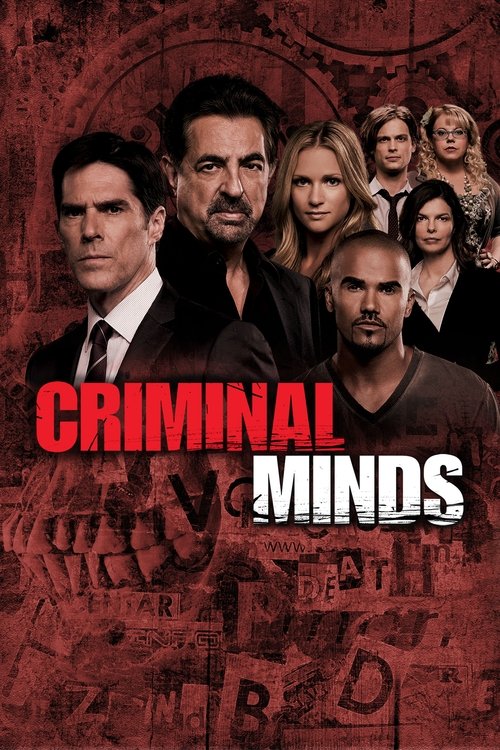
Criminal Minds
Season 8 Analysis
Season Overview
No specific overview for this season.
Season Review
Categorical Breakdown
The plot focuses on profiling individual psychological pathology and trauma as the cause of crime, not systemic oppression or intersectional hierarchy. Casting reflects the show's established ensemble, including White, Black, and female agents, all judged by their professional merit and intellectual contributions. No narrative is dedicated to lecturing on 'whiteness' or privilege; the primary antagonist is a white male who targets the entire multi-racial team based on professional resentment.
The central mission of the BAU is to protect American citizens from domestic terrorists and serial killers, framing institutions like the FBI as a necessary shield against chaos. The Unsubs are almost exclusively American citizens, making American society the source of the evil, but this is attributed to individual psychological breakdown, not a fundamentally corrupt national culture. There is no broad deconstruction or demonization of Western heritage or its foundational institutions.
The score reflects the strong presence of highly competent female leads who occupy critical, powerful roles within a national law enforcement agency (JJ, Garcia, Dr. Blake). The new team member, Dr. Alex Blake, is instantly positioned as a seasoned expert whose intelligence and credentials rival a male counterpart (Dr. Reid). The narrative emphasizes the women's professional skills and leadership. The women are not depicted as perfect 'Mary Sues,' but their competency and the absence of traditional male authority figures (like Hotch's reduced role) elevates the 'Girl Boss' dynamic to a neutral-high level.
The season is completely devoid of overt queer theory or gender ideology lecturing. The central romance is a traditional male-female pairing. The plot maintains a normative structure where the nuclear family is treated as a standard, even if the team members' personal lives are often complex due to their demanding careers. Sexuality is not centered as a primary trait for any of the main characters or as a social justice topic.
The show frequently features ritualistic or pseudo-religious killers, and a few plots touch on cults or twisted spiritual ideologies, but this is a narrative tool to establish the killer's mental state, not a systematic attack on traditional faith. The show generally treats the spiritual beliefs of the characters and victims neutrally or as a personal source of strength, though the intensity of the Unsubs' psychological violence often implies a rejection of objective moral law in favor of subjective, deranged power dynamics.