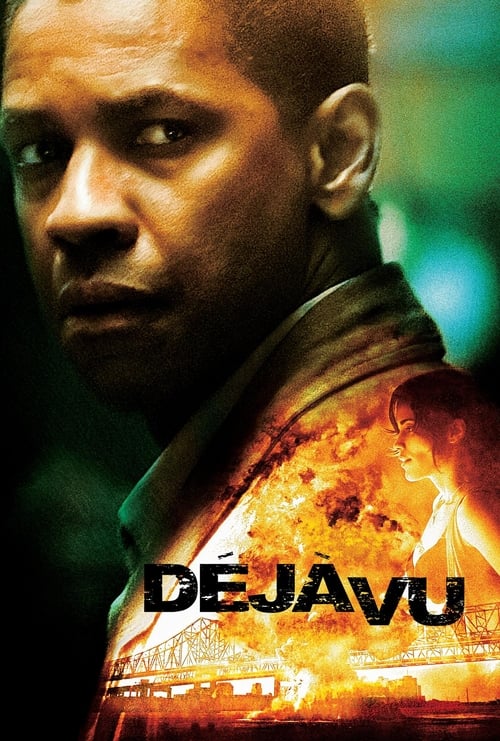
Déjà Vu
Plot
Called in to recover evidence in the aftermath of a horrific explosion on a New Orleans ferry, Federal agent Doug Carlin gets pulled away from the scene and taken to a top-secret government lab that uses a time-shifting surveillance device to help prevent crime.
Get the Weekly Woke Watchlist
New and trending movies scored for woke bias, preachy messaging, and forced political themes — before you waste your evening.
No spam. One useful email per week.
Overall Series Review
Categorical Breakdown
The lead role is a highly competent Black male ATF agent, Doug Carlin (Denzel Washington), whose recruitment is based purely on his superior detective skills, demonstrating a commitment to meritocracy. The villain is a white male domestic terrorist, Carroll Oerstadt, whose actions are driven by personal revenge against the military and political extremism, not vilification of 'whiteness' as a systemic force. Race or other immutable characteristics do not drive the plot or character hierarchy.
The film’s central conflict is the defense of the American city of New Orleans and its citizens against a catastrophic domestic terrorist attack. The threat comes from an internal, radicalized 'patriot' who expresses hostility toward the U.S. military, not from a generalized framing of Western civilization as fundamentally corrupt. The protagonist, a government agent, is positioned as a hero defending the nation and its people from chaos.
The primary female character, Claire Kuchever, is a murder victim whom the male protagonist becomes obsessed with saving. She is primarily a damsel in distress and an object of a love interest unfolding across time. The surveillance device is noted in external reviews for its 'voyeuristic ogling' of her, and she is not portrayed as a 'Girl Boss' or a flawless character. The central romantic dynamic is traditional, with the male hero risking his life for the female victim.
The narrative is a traditional action thriller and romantic quest that contains no visible LGBTQ+ characters, themes, or attempts to deconstruct the nuclear family. Sexuality is a private matter, limited to the hero's developing attraction to the victim he is trying to save.
The movie overtly includes 'God talk and spiritual references' in its dialogue, and the concept of 'divine intervention' is discussed in relation to the time travel technology. The climax, where the protagonist makes a literal sacrifice to save an innocent, is described as 'quasi-Christological,' strongly aligning with themes of transcendent morality, self-sacrifice, and higher moral law rather than promoting anti-theism or moral relativism.
Get the Weekly Woke Watchlist
New and trending movies scored for woke bias, preachy messaging, and forced political themes — before you waste your evening.
No spam. One useful email per week.