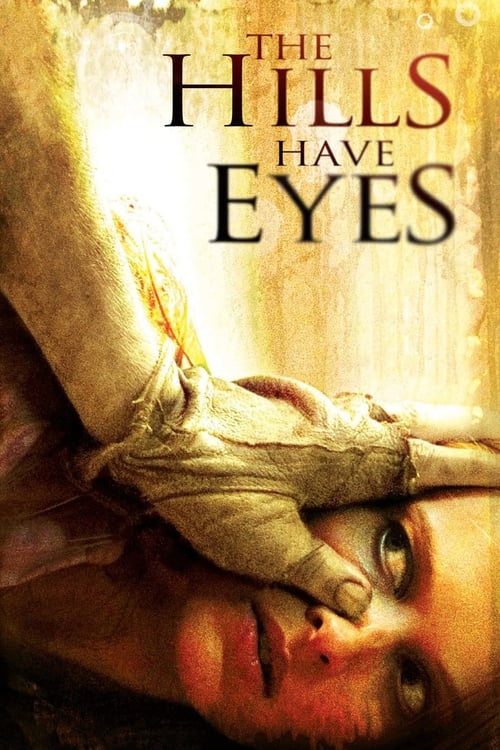
The Hills Have Eyes
Plot
Based on Wes Craven's 1977 suspenseful cult classic, The Hills Have Eyes is the story of a family road trip that goes terrifyingly awry when the travelers become stranded in a government atomic zone. Miles from nowhere, the Carter family soon realizes the seemingly uninhabited wasteland is actually the breeding ground of a blood-thirsty mutant family...and they are the prey.
Get the Weekly Woke Watchlist
New and trending movies scored for woke bias, preachy messaging, and forced political themes — before you waste your evening.
No spam. One useful email per week.
Overall Series Review
Categorical Breakdown
The conflict is based on a clear class hierarchy, pitting the 'suburban white American exceptionalism' of the traveling Carter family against the dispossessed and marginalized mutants, who are victims of government failure. The narrative critiques the privileged class by making them the prey of the monstrous ‘have-nots,’ though the focus remains on class and circumstance, not on immutable characteristics like race for the primary characters.
The film's entire premise is an explicit condemnation of American Cold War policy and government action. The mutants were created by US nuclear testing on their own people, making them the living, grotesque consequence of American 'sins of the past.' This directly frames the ancestors' actions and the institutions of the nation as fundamentally corrupt, generating the chaos that is now attacking the innocent present-day family.
The main heroic journey belongs to the male son-in-law, Doug, who transforms from a timid pacifist into a fierce, protective warrior, driven entirely by the need to save his wife's family and his baby daughter. This heavily features protective masculinity and centers on the sanctity of the family unit and fatherhood as the ultimate motivation. While a daughter is a survivor and fights back, the primary arc celebrates a traditionally masculine, protective role.
The narrative centers entirely on the traditional nuclear family unit, which is under attack and whose survival becomes the moral imperative. There are no characters or subplots dedicated to alternative sexualities, nor is there any commentary on gender ideology or deconstruction of the male-female pairing.
The film's theme is a moral deconstruction, arguing that when pushed to the limit, 'morality and civilized culture is a product of fabrication.' The civilized Carters adopt the same savage, brutal violence as the mutant cannibals to survive, suggesting that objective morality is subjective or only a veneer of social order. This promotes moral relativism, though there is no direct vilification of Christian characters or traditional religion.
Get the Weekly Woke Watchlist
New and trending movies scored for woke bias, preachy messaging, and forced political themes — before you waste your evening.
No spam. One useful email per week.