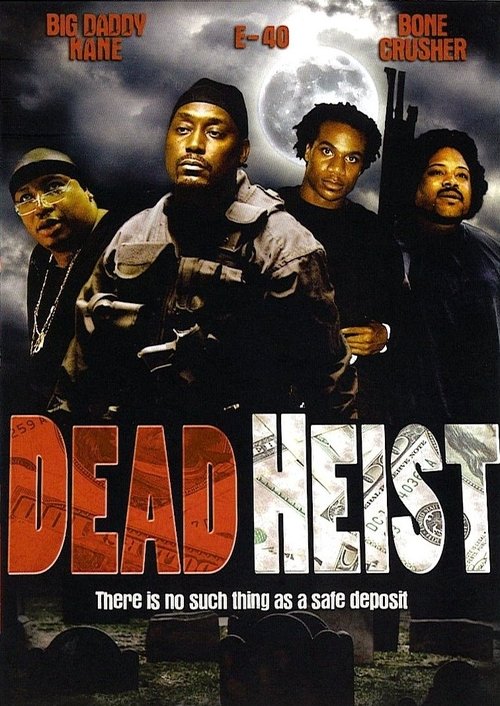
Dead Heist
Plot
Four friends plan the perfect small town bank heist, but choose the wrong night. Their plans go horribly wrong when vampiric zombies attack the town and trap them in the bank. Can they escape with the money and their lives?
Get the Weekly Woke Watchlist
New and trending movies scored for woke bias, preachy messaging, and forced political themes — before you waste your evening.
No spam. One useful email per week.
Overall Series Review
Categorical Breakdown
The core group of protagonists, the incompetent bank robbers, are young Black men, and the film is marketed as "urban horror," centering race through genre-casting rather than intersectional hierarchy. The narrative does not lecture on privilege or systemic oppression. Character competence is judged by survival skill against the monsters, not by immutable characteristics. A Black ex-military hunter and a Black female cop assume leadership roles in the crisis.
The monster outbreak is explicitly a result of a government experiment to create artificial blood that went awry. This creates a minor anti-institutional theme by attributing the chaos to a failed (Western) state project, which is a mild form of distrust. There is no broader critique of Western civilization, a demonization of ancestors, or deconstruction of heritage; the primary focus is on surviving an absurd monster mash.
A female police officer is present and is a competent character who helps lead the fight for survival, which is a standard genre trope for a female action figure. The film does not contain any obvious anti-natalism or anti-family messaging. There is one brief, poorly executed scene where a male character attempts sexual violence against the female officer, making him toxic and evil, but the writing choice appears arbitrary and not part of a larger, coherent message about gender dynamics.
The plot is a simple action-horror premise focusing on bank robbers surviving a monster siege. The narrative offers no evidence of centering alternative sexualities, deconstructing the nuclear family, or engaging with gender ideology. Sexuality is not a theme of the movie.
The monsters are explicitly defined as the result of a scientific experiment to create artificial blood. The conflict is purely physical and survival-based. The film contains no evidence of hostility toward religion, use of religious characters as bigots or villains, or an explicit promotion of moral relativism over an objective moral law.
Get the Weekly Woke Watchlist
New and trending movies scored for woke bias, preachy messaging, and forced political themes — before you waste your evening.
No spam. One useful email per week.