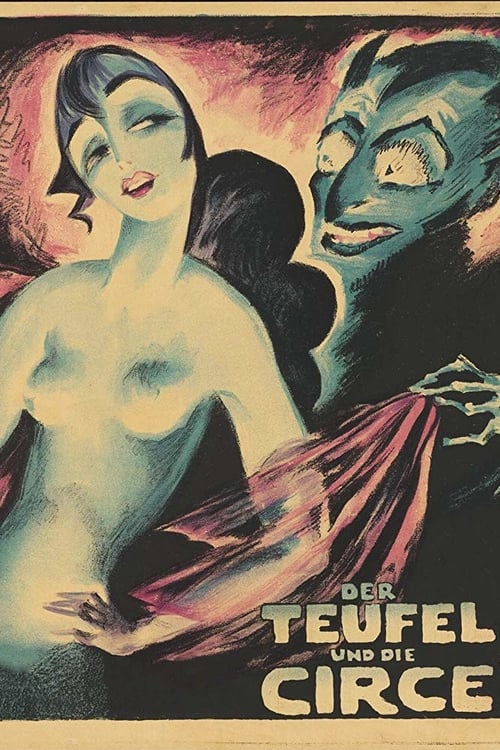
Der Teufel und die Circe
Plot
Get the Weekly Woke Watchlist
New and trending movies scored for woke bias, preachy messaging, and forced political themes — before you waste your evening.
No spam. One useful email per week.
Overall Series Review
Categorical Breakdown
The 1921 German context provides no opportunity for modern intersectional identity politics. The casting of European actors is historically authentic for the production's time and location. The narrative is driven by mythological archetypes of sin and seduction, not by immutable characteristics or systemic oppression.
The Expressionist genre focuses on decadence, moral dissolution, and dark psychological states, which functions as a critique of prevailing bourgeois morality. The narrative does not frame Western culture as fundamentally corrupt due to modern concepts of racism or colonization. Any self-hatred is directed at individual moral decay, not the civilizational heritage itself.
The character Circe is a powerful, highly sexualized sorceress who controls men through magic and seduction, fitting the dominant *Femme Fatale* archetype. This narrative portrays a female figure who aggressively subverts traditional male authority and protective masculinity. The focus is on female dominance and manipulation, which moves away from a complementary gender dynamic and celebrates an anti-natal, destructive form of female power.
The core dramatic conflict is centered on the powerful male-female dynamic of The Devil and Circe, a traditional, albeit wicked, pairing. The film's early 20th-century setting prevents the inclusion of modern queer theory or gender ideology. Sexual themes are connected to the drama of male-female temptation rather than alternative sexualities being a central ideological focus.
The core subject involves a powerful, possibly 'chivalrous,' portrayal of The Devil/Lucifer as a central character, placing a transcendent evil at the heart of the story. The pagan sorceress Circe's power also conflicts with a Christian worldview. This narrative structure is a direct confrontation with the concept of objective, transcendent moral law, embracing a theme of spiritual rebellion and moral relativism.
Get the Weekly Woke Watchlist
New and trending movies scored for woke bias, preachy messaging, and forced political themes — before you waste your evening.
No spam. One useful email per week.