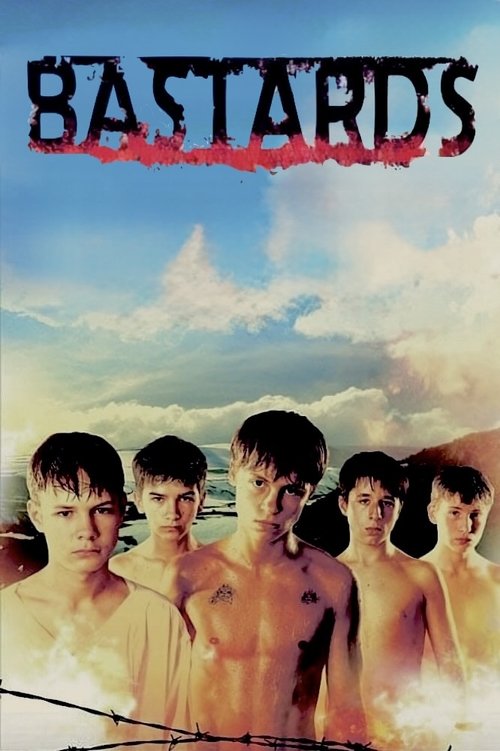
Bastards
Plot
A "Hitlerjugend" kind of story, set in the Soviet Union during the Second World War, based on a fictitious story from the eponymous book by Vladimir Kunin.
Get the Weekly Woke Watchlist
New and trending movies scored for woke bias, preachy messaging, and forced political themes — before you waste your evening.
No spam. One useful email per week.
Overall Series Review
Categorical Breakdown
The narrative focuses on the universal exploitation of juvenile delinquents by a brutal state, regardless of any intersectional characteristic beyond their status as "criminals." The central conflict revolves around the boys' moral choice to find heroism in a system that views them as disposable. Characters are judged on their ability to survive the training and complete a suicide mission. No plot elements rely on vilifying "whiteness" or forced diversity; the cast is historically authentic to the Soviet WWII setting.
The film is a harsh critique of the totalitarian Soviet regime and its NKVD, depicting the Soviet state as fundamentally corrupt for treating its own youth as expendable. The moral center of the film involves the choice to find heroism despite a corrupt national system. Per the prompt's definition, this criticism is directed at a totalitarian communist system, which is philosophically antithetical to core Western institutions, and therefore does not constitute Western civilizational self-hatred.
The story centers on a male-dominated environment: a secret boot camp training 14-15 year old male convicts as saboteurs for a WWII mission. The plot revolves around male bonding, conflict, and survival in a military and criminal setting. There are no prominent female characters, "Girl Boss" tropes, emasculation of males, or anti-natalist messages present in the central conflict.
The film is a WWII military drama about juvenile criminals and their male instructors in 1943 Soviet Union. The plot is strictly concerned with a high-stakes military mission, crime, and survival. The narrative adheres to a normative structure based on its historical and military setting. There is no presence of alternative sexualities, deconstruction of the nuclear family, or lecturing on gender ideology.
The movie operates within a bleak moral framework where the totalitarian state (the officially atheist Soviet Union) is the source of cruelty and moral compromise, suggesting a spiritual vacuum. While the narrative is secular and the characters are forced to operate in a world where morality is subjective to state power, the film's primary hostility is directed at the political and military authority, not at traditional religion (specifically Christianity) as the root of evil.
Get the Weekly Woke Watchlist
New and trending movies scored for woke bias, preachy messaging, and forced political themes — before you waste your evening.
No spam. One useful email per week.