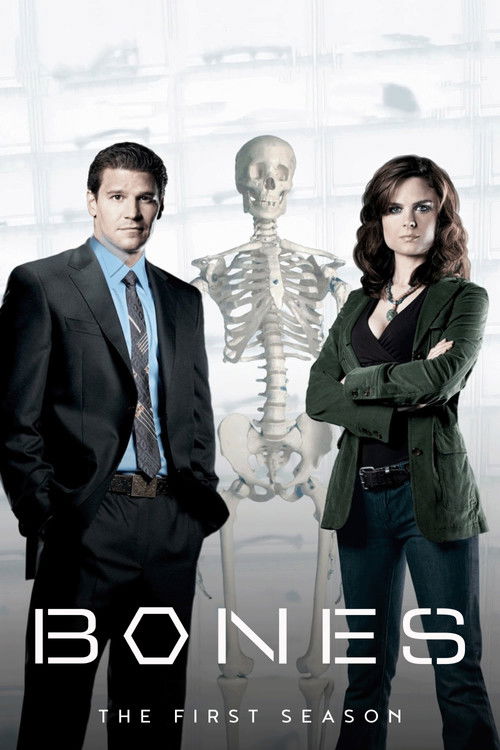
Bones
Season 1 Analysis
Season Overview
A brilliant forensic anthropologist and a skeptical FBI agent team up to solve murders by examining human remains. Their contrasting styles clash—but together, they uncover the truth buried in the bones.
Season Review
Categorical Breakdown
The core team features diversity, including a female forensic artist of color and an African-American institute director, but the cases are solved entirely through scientific merit and evidence. The narrative does not utilize race or immutable characteristics to lecture on systemic oppression or privilege. Cases that touch on ethnic identity, such as a suspected terrorist, resolve the conflict through universal facts discovered by the team.
The show is rooted in a respect for the institutions of the FBI and the Jeffersonian Institute, which are shown to be functional and effective in upholding law and order. A subplot involving a military cover-up in the Iraq War era does not demonize the military as an institution but addresses individual misconduct, and the male lead is a respected veteran and a patriotic figure.
The protagonist, Dr. Brennan, is presented as the supreme 'Girl Boss'—an instantly perfect, emotionally stunted genius who intellectually dominates the hyper-masculine male lead. Booth, the man, is frequently portrayed as the source of emotion, intuition, and spiritual concern, a reversal of traditional gender dynamics that effectively emasculates the male in the partnership. Brennan expresses open scorn for marriage, viewing it as archaic, and treats sex as a purely biological need.
Alternative sexualities are a minor subplot element with a supporting character’s past, but the season’s central dynamic and focus are exclusively on the normative male-female pairing. There is no presence of gender ideology, deconstruction of the nuclear family as oppressive, or explicit lecturing on queer theory. Sexuality remains a private aspect of character background.
The conflict between science and faith is a primary, ongoing theme of the season. Dr. Brennan is an overt atheist who argues for scientific materialism, and Agent Booth is a man of traditional, explicit faith. The show does not portray the religious character as a villain or a bigot, but it gives a powerful, central voice to the atheistic and reductionist worldview of the protagonist.