Bones
Season 7 Analysis
Season Overview
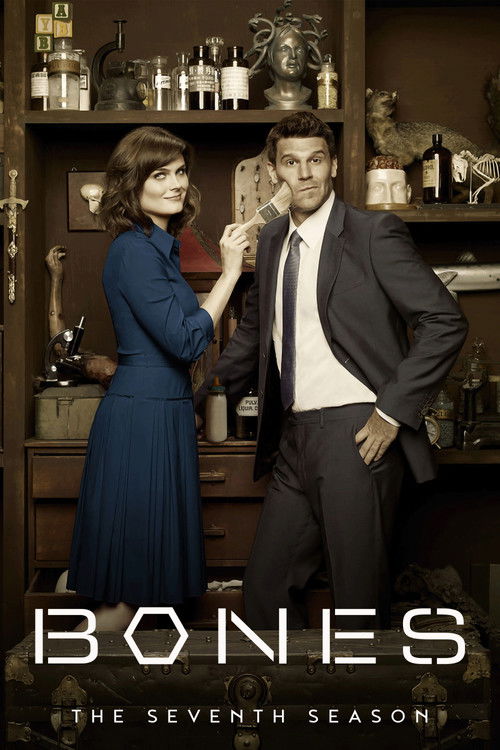
As Brennan and Booth navigate new roles in their personal lives, they face a ruthless tech-savvy killer who always seems one step ahead. The stakes are more personal than ever.
Season Review
Categorical Breakdown
The main cast features organic diversity, including an African-American female boss and a biracial forensic artist who are treated as high-merit, professionally competent characters. The plot does not rely on race or intersectional hierarchy to drive the narrative. The series maintains a universal meritocracy where character is judged by intellectual or professional ability, minimizing the score. The main antagonist, Christopher Pelant, is a white male, but his villainy is based on psychopathy and technological genius, not a vilification of whiteness.
The score is low because the season focuses almost entirely on the characters’ domestic lives, their jobs (FBI, Jeffersonian), and the American institutions of law enforcement and science. The arc culminates in the establishment of a traditional family unit, and a subplot involves the christening of the baby, which is an acknowledgement of Christian/Western family tradition. There are no plots dedicated to criticizing the West, demonizing ancestors, or framing home culture as fundamentally corrupt.
The score is middling due to the show's foundational premise, which is centered on the 'Girl Boss' trope of an instantly brilliant, hyper-rational female lead (Brennan) who often dismisses emotional intelligence. The plot frequently depicts Brennan as disregarding Booth's paternal feelings regarding the pregnancy and birth, such as not inviting him to the ultrasound, which positions her career/independence above a complementary partnership. This is counterbalanced by the narrative's overall celebration of her eventual embrace of motherhood and family as fulfillment, though the male lead (Booth) is occasionally portrayed as an emasculated foil for her rational superiority.
The season's focus is the formation of the nuclear family: Booth, Brennan, and their daughter Christine. This strongly reinforces a normative structure. While one character (Angela) has an established backstory that includes bisexuality, it is not a central theme in this season and she is portrayed within a traditional marriage. There is no focus on sexual identity, deconstruction of the nuclear family, or lecturing on gender theory within the Season 7 plot.
Booth is a devout, practicing Catholic, and his faith is presented as a genuine source of his moral framework, even when it causes internal struggle. A key event is the christening of the main couple's baby, which provides a positive nod to a religious institution. Brennan maintains her atheistic, scientific worldview, but it functions as a foil for Booth’s faith, not as a blanket statement that traditional religion is the root of all evil. The series maintains an objective moral law (Pelant is pure evil; murder is wrong) that transcends subjective 'power dynamics.'