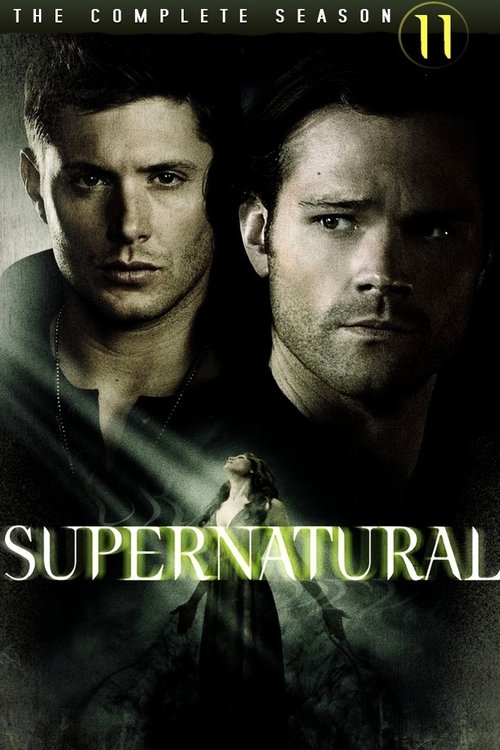
Supernatural
Season 11 Analysis
Season Overview
Following the release of the Darkness, this season follows the Winchesters and their allies as they find themselves fighting the most powerful supernatural entity they've ever faced.
Season Review
Categorical Breakdown
The main cast remains the two white male Winchester brothers, and the primary sidekick is a white male angel. Plot points do not focus on race, class, or other immutable characteristics. Characters are judged solely on their supernatural power and moral choices, not on any intersectional hierarchy. The narrative avoids lecturing on privilege or systemic oppression.
The season's goal is explicitly the preservation of the Earth and human creation from a primordial entity, The Darkness. This commitment to saving humanity and the world functions as a direct defense of human civilization. The family unit of the Winchesters is continuously upheld as the central shield against chaos and existential threats.
The main antagonist, Amara (The Darkness), is a female entity of immense power who predates creation, making her the most powerful entity in the universe next to her brother, God. The witch Rowena also continues as a major, powerful female player who is neither a sidekick nor a love interest. However, the ultimate resolution is achieved through Dean Winchester's appeal to Amara's human-like desire for family and connection, and the heroes who save the day are consistently the male leads. The season does not feature a prominent 'Girl Boss' trope that completely eclipses the men, and male characters are not universally depicted as incompetent.
No major plotlines revolve around alternative sexualities, gender ideology, or the deconstruction of the nuclear family as a source of oppression. The romantic or sexual lives of the characters are not centered in the story, which maintains a normative structure by focusing on the familial bonds of the main male and female characters.
The Christian concept of God is fundamentally undermined and altered. God is revealed to be a flawed, self-centered, and neglectful deity disguised as a comic, human writer. He is directly responsible for imprisoning his sister, The Darkness, and abandoning creation out of fear and creative boredom. This portrayal substitutes a transcendent, omniscient God with an imperfect, relatable being who is shown to be a source of the universe's original conflict, which severely erodes the idea of a faith-based Objective Truth.