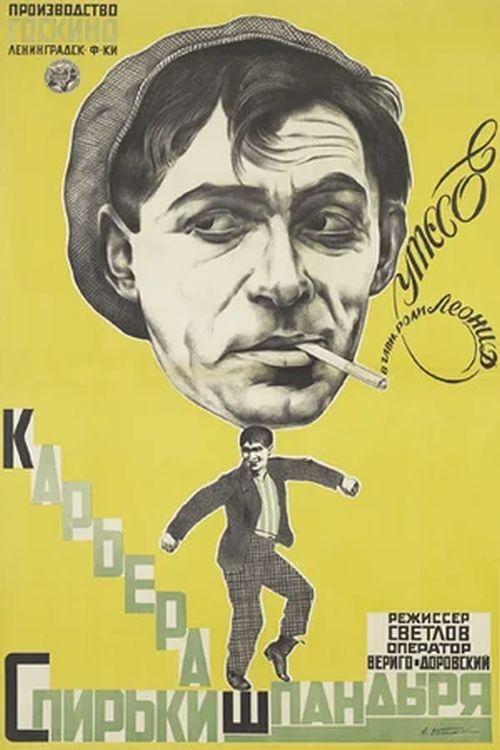
The Career of Spirka Shpandyr
Plot
Spirka Spandyr, a petty crook and swindler, escapes from the Soviet Union after serving his sentence and soon becomes the pride of the White émigré community in Amsterdam — Baron Spirka von Spandyr.
Get the Weekly Woke Watchlist
New and trending movies scored for woke bias, preachy messaging, and forced political themes — before you waste your evening.
No spam. One useful email per week.
Overall Series Review
Categorical Breakdown
The film's central conflict is based on ideology and class (Soviet vs. émigré/bourgeoisie), not race or immutable characteristics. The protagonist's success is based on his individual charm and cunning, reflecting a rogue's meritocracy, not on systemic privilege or the vilification of a specific ethnic group.
The plot functions as Soviet-era propaganda, framing the Western-aligned White émigré culture, representing the old Russian order and European bourgeoisie, as fundamentally corrupt, shallow, and easily manipulated. This portrays an external, Western-aligned culture as morally inferior, which fits the definition of civilizational self-hatred for the West and its ancestral institutions.
The plot synopsis and analysis focus entirely on the male protagonist and his career as a swindler. There is no available information to assess the roles of female characters, their agency, the gender dynamics, or any messaging about motherhood or female professional ambition. A neutral score is assigned due to a lack of data.
The 1926 silent film is a political satire centered on class and ideology. Sexual identity is not a primary theme of the narrative, and there is no presence of modern alternative sexualities, gender theory lecturing, or deconstruction of the nuclear family. The structure is normative for its era.
The movie is a product of the officially atheist Soviet state, which inherently promoted a spiritual vacuum over traditional religion. The sympathetic protagonist is a swindler whose success is based on deceit and amoral cunning, implicitly framing morality as subjective cleverness rather than a source of transcendent truth or higher moral law.
Get the Weekly Woke Watchlist
New and trending movies scored for woke bias, preachy messaging, and forced political themes — before you waste your evening.
No spam. One useful email per week.