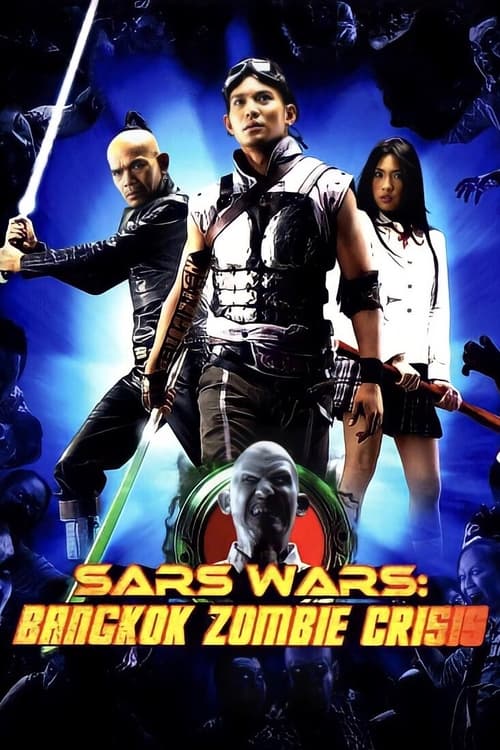
Sars Wars: Bangkok Zombie Crisis
Plot
In the wake of a deadly SARS outbreak that's turned ordinary folks into flesh-eating zombies, Thailand stands alone as the only nation to block the pandemic. That is, until the virus finds its way into a crowded Bangkok apartment complex.
Get the Weekly Woke Watchlist
New and trending movies scored for woke bias, preachy messaging, and forced political themes — before you waste your evening.
No spam. One useful email per week.
Overall Series Review
Categorical Breakdown
Characters are judged by their role in the crisis—hero, victim, or zombie—not by an intersectional hierarchy. The cast is overwhelmingly authentic to the Thai setting with no evidence of forced diversity or historical 'race-swapping'. The narrative does not contain vilification of 'whiteness' as the main conflict is a local one involving a superhero crimefighter, a gang, and government incompetence.
The film satirizes certain domestic institutions, such as an incompetent health ministry planning to bomb its own people, and lampoons a monk, suggesting a level of domestic self-deprecating humor. However, the initial framing positions Thailand as the only nation to successfully resist the global pandemic, which is a point of national pride rather than civilizational self-hatred. The core conflict is not about deconstructing Thai heritage in favor of an 'Other' culture.
The core plot features a male hero, Khun, whose primary mission is the protective rescue of a kidnapped teenage schoolgirl. While there is a competent female scientist, Dr. Diana, another is described with the 'slutty sexy scientist' trope. Men are not universally emasculated; the hero is a virginal warrior. The film’s gender dynamics are more a product of exploitation/shock comedy tropes from the 2004 era than a modern 'Girl Boss' or anti-natalist lecture, despite the presence of extreme zombie baby gore for laughs.
The movie includes 'countless jokes about transsexuals' and features a 'transvestite' neighbor character, which is typical of the shock-comedy style and common tropes in Thai cinema. This is used as material for crude, non-ideological humor and parody, not as an exercise in Queer Theory. The narrative does not focus on centering alternative sexualities as the most important trait or deconstructing the nuclear family through a political lens, but rather uses them for absurd comedic effect.
There is a direct satirical jab at organized religion through the explicit depiction of a 'sex-starved monk' character. This character is used for absurd, sacrilegious comedy, including powering his lightsaber with bad batteries, which constitutes active hostility/mockery of traditional religious figures and institutions. The film’s pervasive sense of moral and existential absurdity inherently embraces a form of moral relativism.
Get the Weekly Woke Watchlist
New and trending movies scored for woke bias, preachy messaging, and forced political themes — before you waste your evening.
No spam. One useful email per week.