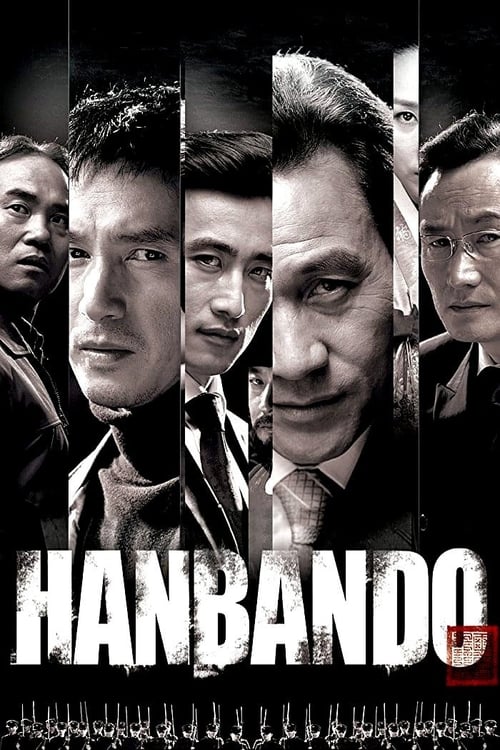
Hanbando
Plot
The President of South Korea races against time to prove the seal on documents from long dead King Gojong is fake by charging outspoken historian Choi Min-jae, and a descendant of the royal bloodline Kim Yu-shik, to find the long lost seal in order to prove that the Japanese claim to railroads is false, a claim that will stop the reunification of the two Koreas.
Get the Weekly Woke Watchlist
New and trending movies scored for woke bias, preachy messaging, and forced political themes — before you waste your evening.
No spam. One useful email per week.
Overall Series Review
Categorical Breakdown
The film's entire conflict is an international struggle for national sovereignty and historical vindication, pitting the Korean people against an external power (Japan). Character merit is defined by patriotism and the pursuit of objective historical truth and national honor. There is no reliance on immutable characteristics to create an internal intersectional hierarchy, and the narrative centers on national identity rather than race-based grievance.
The central theme is the promotion of Korean civilizational pride, the honoring of national ancestors (King Gojong), and the defense of core national institutions (reunification, sovereignty) against an external threat. The film explicitly criticizes a foreign power's historical actions, directly promoting a sense of national unity and historical self-respect, which is the exact opposite of civilizational self-hatred.
The core cast of the President, Prime Minister, historian, and royal descendant are all male, establishing a traditional, male-dominated political and historical narrative. The plot focuses on geopolitical tension and a treasure hunt for a historical artifact. There are no prominent 'Girl Boss' or 'Mary Sue' tropes, no evidence of emasculation of males, and no messaging that disparages motherhood or family structure.
The narrative is entirely preoccupied with historical conspiracy, national sovereignty, and reunification. There is no presence of alternative sexual ideologies, deconstruction of the nuclear family, or any commentary on gender theory. The structure is entirely normative.
The dramatic tension and moral core of the film are based on the objective existence of historical truth (the authenticity of the Great Seal) and the moral necessity of fighting for national sovereignty. The film is a secular political thriller with no visible hostility toward religion or promotion of moral relativism; the moral law is objective and tied to national honor.
Get the Weekly Woke Watchlist
New and trending movies scored for woke bias, preachy messaging, and forced political themes — before you waste your evening.
No spam. One useful email per week.