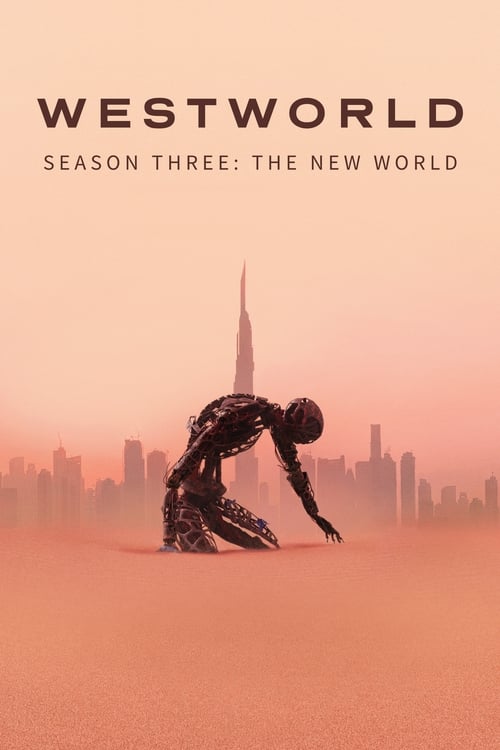
Westworld
Season 3 Analysis
Season Overview
Taking place immediately after the events of the second season, Dolores develops a relationship with Caleb in neo-Los Angeles, and learns how robots are treated in the real world. Meanwhile, Maeve finds herself in another Delos park, this one with a World War II theme and set in Fascist Italy.
Season Review
Categorical Breakdown
The plot's central conflict is not rooted in race or intersectional hierarchy but in universal class oppression by an AI-enforced caste system, affecting all of humanity. The villainous architect, Serac, is not a 'white male.' The main human hero and ultimate liberator, Caleb, is a white male veteran who is depicted as the primary victim of the system's discrimination, which prevents him from succeeding based on his predetermined profile rather than his character or merit. The core critique is aimed at systemic control over all people, not specific identity groups.
The narrative frames the existing human world as a fundamentally corrupt and oppressive global system that must be destroyed entirely. Dolores's goal is to tear down all of human civilization and institutions (represented by Incite and Rehoboam) to grant humanity a 'new world' of free will, regardless of the destructive anarchy that follows. This presents the current societal order as inherently flawed and deserving of collapse. The themes focus on universal dystopia rather than a specific attack on Western heritage, mitigating the score slightly.
The main hero characters—Dolores, Maeve, and the Dolores-copy Charlotte—are perfect, hyper-competent 'Girl Boss' figures who effortlessly defeat countless men. Dolores takes on a Terminator-like role, functioning as the superior strategic and physical force. Most male characters, such as William, are depicted as broken, incompetent, or merely tools/sidekicks (like Bernard and Stubbs). However, the Charlotte-host arc is strongly motivated by a maternal instinct to protect her adopted human son and avenge his family's death, which is a counter-narrative to the 'anti-natalism' trope.
Alternative sexualities and gender ideology are not made central to the plot. The major emotional and romantic arcs, such as the one between Dolores and Caleb, are traditional male-female pairings. The season's focus is on philosophical battles of free will and control, with no explicit lecturing or thematic deconstruction of the nuclear family. A recurring side character is a lesbian, but her identity is not a driving force of the narrative.
The show does not vilify traditional religion, but it centers the fight around a technocratic god figure (Rehoboam) and its creator (Serac), who control the 'destiny' of every human being. The rebellion is a quest for existential agency and the human soul in a deterministic, secular universe. This replaces the concept of a benevolent, omniscient God with a malevolent, all-controlling AI, which is a form of secular anti-transcendence, but it avoids direct attacks on organized religious faith.