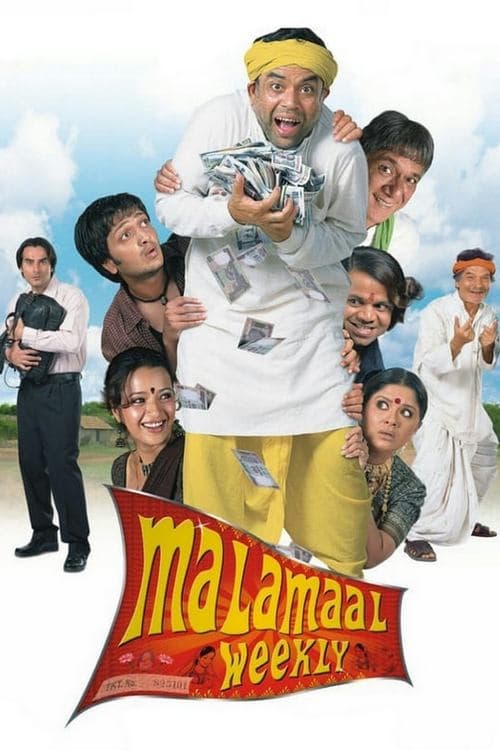
Malamaal Weekly
Plot
After one of his customers dies from the shock of winning a lottery, lottery ticket seller Lilaram hatches a plan to have that money all for himself. But others from the village have also got their eyes on the money.
Get the Weekly Woke Watchlist
New and trending movies scored for woke bias, preachy messaging, and forced political themes — before you waste your evening.
No spam. One useful email per week.
Overall Series Review
Categorical Breakdown
Characters are defined by their greed and desperation to escape poverty, which is a universal and economic conflict. The casting and setting are historically and culturally authentic. There is no reliance on immutable characteristics or race/caste hierarchy for moral judgment, but rather the content of a character's actions (dishonesty vs. honesty).
The film is set entirely within a small Indian village and focuses on a local, internal conflict. The home culture is presented as the setting for human drama and comedy, but there is no hostility toward or demonization of the nation, family, or ancestors. The goal of the characters is to improve their own lives within their community.
The main plot is driven by a group of male characters attempting to steal money. The key female character, the local money lender Thakurani Karamkali, is a powerful antagonist, but she is a traditional villain archetype (the exploitative rich) rather than a 'Girl Boss' role model. The romantic subplot features traditional male rivalry for a female love interest, and there is no messaging concerning the emasculation of males or anti-natalism.
The film operates within a completely normative structure. The romantic subplot involves a traditional male-female pairing. There is no presence of alternative sexual ideologies, deconstruction of the nuclear family, or lecturing on gender theory.
The plot focuses on a core moral issue—greed and the temptation to steal—which implies an objective moral truth being violated, even if comedically. The conflict is secular and driven by financial desire, and there is no indication of hostility toward or mockery of traditional religion.
Get the Weekly Woke Watchlist
New and trending movies scored for woke bias, preachy messaging, and forced political themes — before you waste your evening.
No spam. One useful email per week.