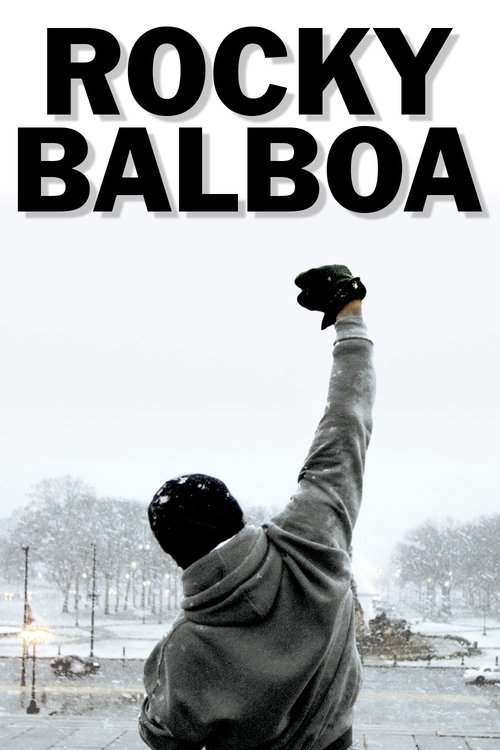
Rocky Balboa
Plot
When he loses a highly publicized virtual boxing match to ex-champ Rocky Balboa, reigning heavyweight titleholder Mason Dixon retaliates by challenging the Italian Stallion to a 10-round exhibition bout. To the surprise of his son and friends, Rocky agrees to come out of retirement and face an opponent who's faster, stronger and thirty years his junior. Rocky takes on Dixon in what will become the greatest fight in boxing history!
Get the Weekly Woke Watchlist
New and trending movies scored for woke bias, preachy messaging, and forced political themes — before you waste your evening.
No spam. One useful email per week.
Overall Series Review
Categorical Breakdown
The film’s central conflict is framed as a battle between an old-school boxer and the corporate, calculated modern boxing world, not a racial or class struggle. Character success is determined entirely by personal merit, grit, and heart. The casting includes people of diverse backgrounds, such as the current champion and the respected trainer, but their roles are defined by their boxing skill and personal character, not by intersectional identity.
The film explicitly validates the protagonist’s heritage, home, and ancestors. Rocky’s personal life revolves around his Philadelphia community, his Italian restaurant named after his deceased wife, Adrian, and repeated visits to her grave, demonstrating profound respect for his past and familial institutions. The narrative contrasts his authentic working-class neighborhood with sterile, modern environments, validating the former as a source of strength.
The core emotional conflict is Rocky’s grief for his wife, Adrian, whose memory serves as his primary motivation, honoring her complementary role in his life. The movie’s focus is on the protective nature of masculinity and the importance of a father-son relationship. Women, such as the character Marie, are present but do not take on the 'Girl Boss' trope, nor is there any anti-family or anti-natal messaging.
No themes or characters related to alternative sexualities, gender ideology, or the deconstruction of the nuclear family are present in the narrative. The story centers on the traditional male-female pairing, represented by the deep, enduring bond between Rocky and the memory of his wife, and the struggle to mend his relationship with his adult son.
The protagonist, Rocky Balboa, maintains his lifelong, simple Catholic faith, which is depicted as a quiet but consistent source of personal strength and moral grounding. He prays before the final fight, and his life philosophy, centered on perseverance and personal accountability, aligns with a transcendent moral law. Traditional religion is treated with respect and as an aid to character.
Get the Weekly Woke Watchlist
New and trending movies scored for woke bias, preachy messaging, and forced political themes — before you waste your evening.
No spam. One useful email per week.