Shutter
Plot
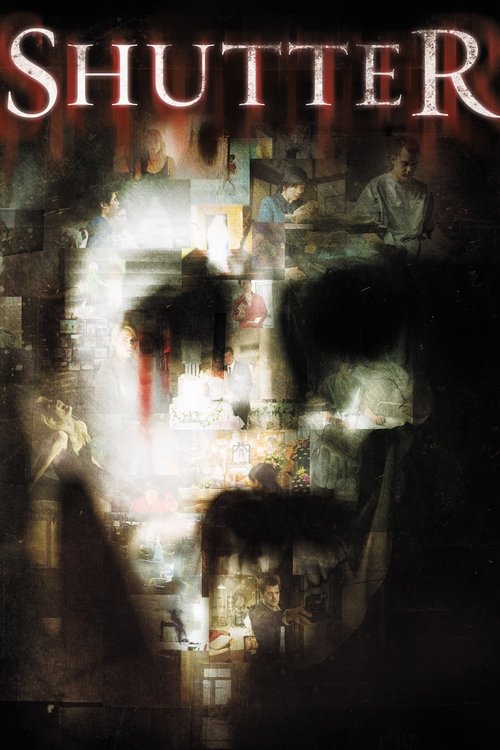
A newly married couple discovers disturbing, ghostly images in photographs they develop after a tragic accident. Fearing the manifestations may be connected, they investigate and learn that some mysteries are better left unsolved.
Get the Weekly Woke Watchlist
New and trending movies scored for woke bias, preachy messaging, and forced political themes — before you waste your evening.
No spam. One useful email per week.
Overall Series Review
Categorical Breakdown
The core conflict is driven by the male protagonist and his two white American friends, who are revealed to be morally repugnant sexual abusers, with their victim being Megumi, a Japanese woman. The plot vilifies the white male characters as perpetrators of sexual violence and deceit while centering the retribution of the Asian female victim/ghost. This sets up an explicit intersectional hierarchy where the white males represent systemic corruption and the non-white woman is the force of righteous vengeance.
The film presents the three American men as morally bankrupt characters who bring their toxic behavior, including sexual violence, lying, and cover-up, to a foreign, non-Western country (Japan). The narrative's entire engine for justice is the local non-Western spiritual system, which punishes the American protagonists for their crimes. The story contrasts the moral failure of the Western characters with the transcendent and inescapable moral order of the external culture, functioning as an indictment of the moral decay of the Western men.
The main male characters, Ben and his two friends, are all exposed as deceitful, weak, and ultimately vile abusers whose toxic masculinity leads to the suicide of their victim. The female protagonist, Jane, is the one who conducts the investigation, uncovers the truth, and acts as the story's moral compass by leaving the abusive male. The female ghost, Megumi, is portrayed as an all-powerful avenging spirit who transcends death to deliver justice to the unpunished male perpetrators, embodying a radical female power fantasy that condemns men.
The story focuses exclusively on heterosexual relationships and marital dynamics, albeit toxic ones. There are no LGBTQ+ characters, themes of alternative sexualities, or elements of deconstructing the nuclear family, as the couple's relationship failure is tied to specific crimes and spiritual haunting, not a critique of the traditional structure itself. The narrative does not lecture on gender theory.
The film is not anti-Christian but heavily features a strong occult and spiritualist worldview based on Japanese Shinto-influenced beliefs in vengeful spirits and spirit photography. The spiritual element functions as an enforcer of objective moral law, where the sin of sexual assault is punished with spiritual and physical affliction. This embraces a supernatural, non-Western transcendent morality, which is in direct opposition to Western religious morality, but it does not promote moral relativism, placing it in the middle.
Get the Weekly Woke Watchlist
New and trending movies scored for woke bias, preachy messaging, and forced political themes — before you waste your evening.
No spam. One useful email per week.