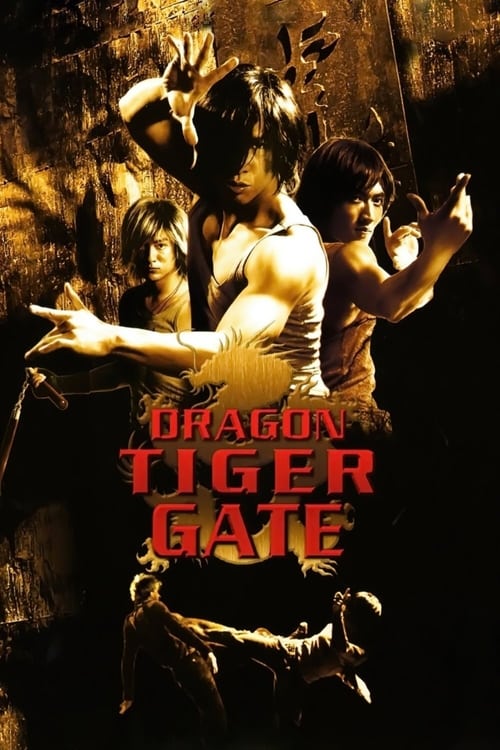
Dragon Tiger Gate
Plot
Three young martial arts masters emerge from the back streets of Hong Kong to help the powerless fight injustice.
Get the Weekly Woke Watchlist
New and trending movies scored for woke bias, preachy messaging, and forced political themes — before you waste your evening.
No spam. One useful email per week.
Overall Series Review
Categorical Breakdown
The movie is a martial arts film where character merit is defined entirely by fighting skill, discipline, and moral righteousness. The main conflict is between righteous Hong Kong heroes and local/external villains. The casting is authentic to the Hong Kong setting and its Chinese source material. There is no focus on Western immutable characteristics, vilification of 'whiteness,' or intersectional hierarchy.
The narrative centers on defending a local institution, the Dragon Tiger Gate, a martial arts school that stands for justice in the community. The protagonists are heroes who fight to protect their home and the powerless from internal corruption (triads) and external threats. The film is a celebration of local martial arts tradition and a call for justice, not a deconstruction of heritage.
The core plot focuses on the relationships and development of the three male protagonists (brotherhood). Female characters are present but secondary, serving mostly as romantic interests or 'token' villains/allies, which adheres to more traditional gender dynamics. The film does not feature a 'Girl Boss' trope, the emasculation of males, or anti-natalist messaging, with the focus remaining on masculine martial arts vitality and honor.
The story adheres to a normative structure where the primary relationships are male-female romantic pairings. There is no presence of alternative sexual ideologies, deconstruction of the nuclear family, or political lecturing on gender theory. Sexuality remains a private, non-central aspect of the characters' identities.
The movie is structured around a transcendent moral code of justice, honor, loyalty, and righteousness that is central to the kung fu/wuxia genre. The martial arts itself is a path to moral and spiritual improvement (e.g., learning legendary skills). There is no hostility toward religion or the embrace of moral relativism; the battle is clearly between objective good (justice) and evil (triad oppression).
Get the Weekly Woke Watchlist
New and trending movies scored for woke bias, preachy messaging, and forced political themes — before you waste your evening.
No spam. One useful email per week.