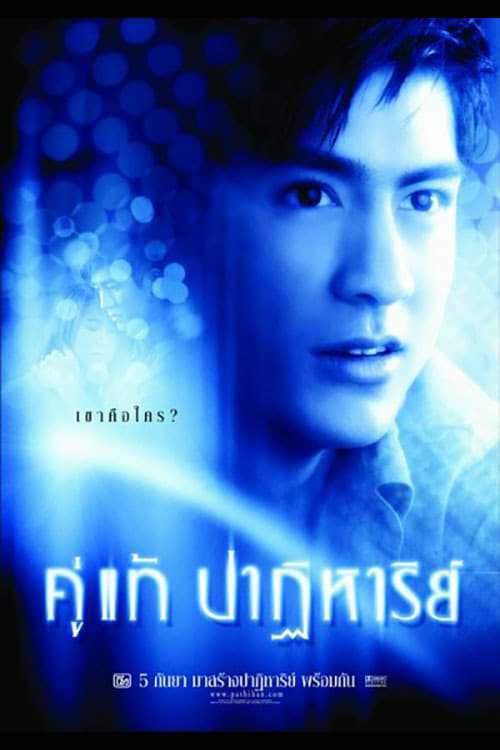
The Whistle
Plot
As if by magic, Nam meets her elementary school friend when her life is in danger. After that encounter, Muton keeps appearing when Nam is most in need and always helps her through whatever difficulty she is facing. One day, when Nam and Muton realizes that Nam has heart disease, they decide to spend her last moments together as each has realized that they are deeply in love. During their vacation on the beach one day, Muton suddenly feels a serious pain in his chest and vanishes into thin air. Nam does not know what to make of it but is determine to solve the mystery behind her lover's disappearance. What she finds will both break and save her heart.
Get the Weekly Woke Watchlist
New and trending movies scored for woke bias, preachy messaging, and forced political themes — before you waste your evening.
No spam. One useful email per week.
Overall Series Review
Categorical Breakdown
The plot focuses on the universal experience of tragic, fated love and personal illness. Characters are defined by their deep emotional connection and their response to a supernatural mystery. There is no emphasis on immutable characteristics, race, or intersectional hierarchy in the narrative. The plot functions on meritocracy of the heart and soul.
The film is a Thai production centered on local culture, romance, and a supernatural mystery. The narrative contains no elements of hostility toward Western civilization, its ancestors, or core institutions. The story is culturally specific to its non-Western setting and does not engage in civilizational self-hatred.
The female lead, Nam, is driven and determined as she actively seeks to solve the mystery of her lover's vanishing. This shows character vitality and agency. However, her primary motivation for this drive is deep, devoted romantic love for a male partner, not careerism or ideological rejection of traditional roles. The female lead is also afflicted with a serious heart disease, which prevents the 'Mary Sue' perfection trope.
The core of the plot is an explicitly traditional heterosexual romance between Nam and Muton, centered on them being deeply in love and spending her final moments together. The narrative establishes a normative structure without including alternative sexualities, deconstructing the nuclear family, or lecturing on gender theory.
The plot is infused with strong supernatural elements—Muton appears 'as if by magic' and then vanishes into thin air—suggesting a transcendent dimension to the story. The ultimate resolution promises to 'break and save her heart,' indicating a spiritual or fated truth. This embracing of a supra-rational and transcendent reality is antithetical to a secular spiritual vacuum or moral relativism.
Get the Weekly Woke Watchlist
New and trending movies scored for woke bias, preachy messaging, and forced political themes — before you waste your evening.
No spam. One useful email per week.