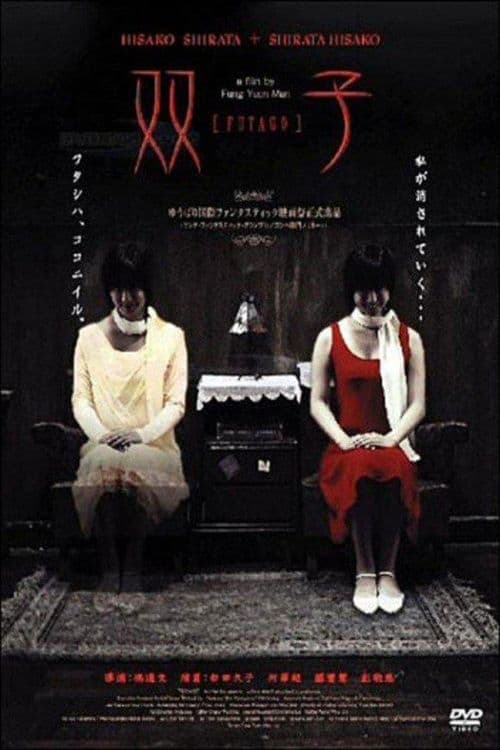
Futago
Plot
The tenants of a seedy rooming house in Hong Kong think they're seeing a vengeful ghost when a strange girl arrives claiming to be the twin sister of a missing occupant. Wracked by guilt, they begin to die one by one, and the detective investigating their apparent suicides discovers that whatever karma people give out comes back to them... twofold.
Get the Weekly Woke Watchlist
New and trending movies scored for woke bias, preachy messaging, and forced political themes — before you waste your evening.
No spam. One useful email per week.
Overall Series Review
Categorical Breakdown
The movie features an entirely Asian cast, with a conflict focused on individual greed, exploitation, and moral guilt among low-life tenants. The narrative is a morality tale about crime and cover-up, not a lecture on race, intersectional hierarchy, or the vilification of any specific group.
The film criticizes the moral failure and criminal activity of a few specific characters within a cheap hostel setting. The narrative does not indict the Hong Kong or East Asian civilization as a whole. The film's central theme is driven by the concept of 'karma,' which supports a transcendent moral framework within an Eastern context.
The primary female characters are a victim and the mysterious avenging entity (or manifestation of guilt). Men are portrayed as morally corrupt exploiters who abuse the victim. While a female figure administers justice, this is a classic supernatural horror trope used to punish vice, not a promotion of the modern 'Girl Boss' or anti-natalist ideology.
The plot is a simple horror-thriller centered on the themes of guilt, vengeance, and moral decay. There is no presence of alternative sexual ideologies, gender theory, or any deconstruction of the normative family structure. The focus remains on the individual moral accountability of the tenants.
The entire story is built upon the idea of 'karma' and a supernatural force ensuring that moral misdeeds are punished 'twofold.' This strong emphasis on moral reckoning and a higher form of justice explicitly champions a form of transcendent morality over subjective, relative ethics.
Get the Weekly Woke Watchlist
New and trending movies scored for woke bias, preachy messaging, and forced political themes — before you waste your evening.
No spam. One useful email per week.