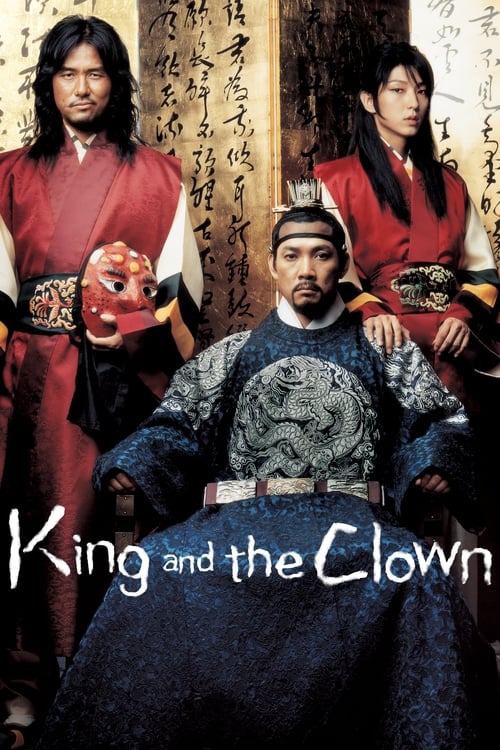
The King and the Clown
Plot
Two clowns living in Korea's Chosun Dynasty get arrested for staging a play that satirizes the king. They are dragged to the palace and threatened with execution but are given a chance to save their lives if they can make the king laugh.
Get the Weekly Woke Watchlist
New and trending movies scored for woke bias, preachy messaging, and forced political themes — before you waste your evening.
No spam. One useful email per week.
Overall Series Review
Categorical Breakdown
The core conflict is based on a rigid *class* hierarchy, pitting the low-born, itinerant clowns against the powerful, corrupt royal ministers. The narrative elevates the marginalized clowns who possess the artistic *merit* to speak truth. The film is set entirely in Korea and does not feature or vilify 'whiteness' or engage in forced insertion of diversity based on immutable characteristics. The struggle is one of power versus artistic integrity.
The film does not frame Korean civilization as fundamentally corrupt or racist, but rather critiques the *specific tyranny* of King Yeonsan, a historical figure known for his erratic and cruel rule, and the *corruption* of his court officials. It is a targeted political critique within the culture, while simultaneously celebrating and showcasing the beauty of traditional Korean performance arts and costumes.
Female characters are largely minor. The most significant 'gender' element is Gong-gil's performance as a female impersonator, which reflects a historical practice in Korean traditional arts due to restrictions on women performing. The story’s focus on the male leads and their relationships with the King bypasses modern 'Girl Boss' tropes, emasculation of men as a theme, or anti-natalist messaging. The central female figure is a concubine whose power is derived entirely from the King.
Same-sex attraction is a central, driving force of the plot. The King’s obsessive fixation on Gong-gil is explicit and forms a key plot point that leads to the tragedy. The profound and intimate bond between the two main male leads, Jangsaeng and Gong-gil, is widely interpreted as romantic, providing the main emotional arc. While the theme is handled with historical subtlety and focuses on personal obsession rather than political messaging, the narrative explicitly centers alternative sexualities and relationships.
The conflict stems from political corruption, personal psychological trauma (the King’s background), and the failure of moral responsibility by the King and his ministers, which aligns with a failure to uphold the Confucian moral order of the Joseon era. There is no overt hostility toward religion or a spiritual vacuum where a traditional religion is demonized or framed as the root of evil. Morality is judged by the consequences of the characters' actions and abuses of power.
Get the Weekly Woke Watchlist
New and trending movies scored for woke bias, preachy messaging, and forced political themes — before you waste your evening.
No spam. One useful email per week.