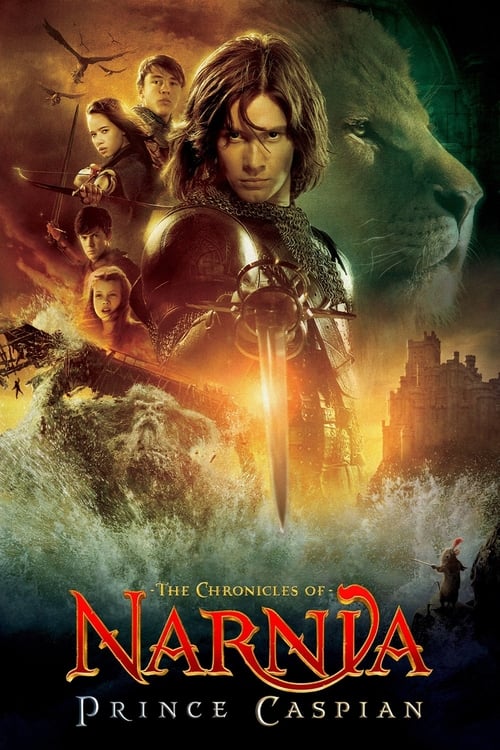
The Chronicles of Narnia: Prince Caspian
Plot
One year after their incredible adventures in the Lion, the Witch and the Wardrobe, Peter, Edmund, Lucy and Susan Pevensie return to Narnia to aid a young prince whose life has been threatened by the evil King Miraz. Now, with the help of a colorful cast of new characters, including Trufflehunter the badger and Nikabrik the dwarf, the Pevensie clan embarks on an incredible quest to ensure that Narnia is returned to its rightful heir.
Get the Weekly Woke Watchlist
New and trending movies scored for woke bias, preachy messaging, and forced political themes — before you waste your evening.
No spam. One useful email per week.
Overall Series Review
Categorical Breakdown
The conflict is based on a fight for the throne and the liberation of the native Narnian magical creatures from the oppressive, human Telmarine conquerors. The narrative is a clear-cut good vs. evil scenario, not a lecture on systemic oppression based on immutable characteristics. Characters are judged by their loyalty, courage, and moral choices. The Pevensie children, who are White, are the prophesied High Kings and Queens returning to save the land, directly contradicting a vilification of 'whiteness.'
The story's purpose is the complete opposite of civilizational self-hatred, centering on the restoration of Narnia’s 'Golden Age,' which represents a high-trust, ordered, and flourishing society. The film’s focus is on reclaiming heritage and civilization from a corrupt, tyrannical regime (the Telmarines) that has attempted to erase the history and magic of Old Narnia. There is a clear appreciation for the institutions and history that precede the current conflict.
The female characters, Queen Susan and Queen Lucy, are respected and competent warriors (Susan) and possessors of unique spiritual insight (Lucy). They are not 'Girl Boss' tropes because they function complementarily within a group that also includes strong male characters, such as Peter, Edmund, and Caspian. Peter, the High King, is shown with a 'boorish personality' due to his frustration, demonstrating that the male lead is flawed, not perfect. The narrative does not contain anti-family or anti-natal messaging.
The story contains no presence or centering of alternative sexual ideologies. The focus is entirely on a political power struggle and the return of a Christ-like figure. The only notable romantic development is a brief, traditional pairing between a male and female character, Prince Caspian and Queen Susan.
The core of the Narnia saga is a Christian allegory, with the character Aslan representing a Christ-like figure who is the source of all good, life, and moral law. The plot revolves around the Narnians' faith in Aslan despite his absence and the restoration of the objective moral order he embodies. Faith in a transcendent, benevolent power is explicitly shown as the source of salvation and strength.
Get the Weekly Woke Watchlist
New and trending movies scored for woke bias, preachy messaging, and forced political themes — before you waste your evening.
No spam. One useful email per week.