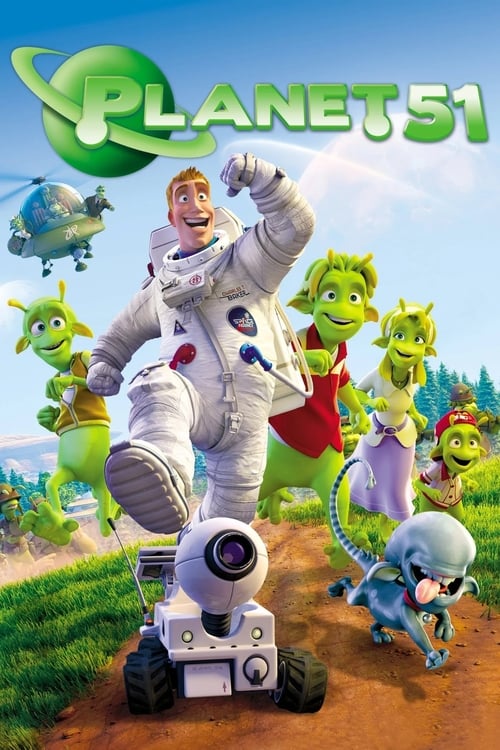
Planet 51
Plot
When Earth astronaut Capt. Chuck Baker arrives on Planet 51 -- a world reminiscent of American suburbia circa 1950 -- he tries to avoid capture, recover his spaceship and make it home safely, all with the help of an empathetic little green being.
Get the Weekly Woke Watchlist
New and trending movies scored for woke bias, preachy messaging, and forced political themes — before you waste your evening.
No spam. One useful email per week.
Overall Series Review
Categorical Breakdown
The narrative operates on a universal theme of xenophobia, where the human astronaut (Chuck) is the feared 'alien' or 'pink-skinned outsider,' not a vehicle for lecturing on Earth's racial or intersectional privilege hierarchy. The character's arc focuses on learning humility, a universally applicable moral, rather than systemic oppression.
The film’s central conceit is a light satire of 1950s American paranoia, specifically fear of the unknown and 'Area 51' style military secrecy, which it portrays as ignorant and fearful. The military/government authorities (General Grawl) are the villains. However, the everyday suburban alien culture is portrayed as peaceful and friendly, mitigating a full indictment of the 'home' culture as fundamentally corrupt.
The primary female character, Neera, is the love interest of the male lead, Lem, and they have a traditional romantic subplot focused on courtship. While she is portrayed as independent and an activist for peaceful engagement with the alien, she is not a 'Girl Boss' figure and does not function to emasculate the male characters.
No elements of alternative sexualities, gender ideology, or deconstruction of the nuclear family are present in the film. The romantic dynamic is centered on the normative male-female pairing of the two young leads.
The conflict is entirely secular, driven by the planet's irrational fear of alien 'Humaniacs' and the misguided authority of the military and science figures (Professor Kipple). There is no reference to religion, faith, or hostility toward Christian figures or traditional morality; the morality taught is secular tolerance and truth-seeking.
Get the Weekly Woke Watchlist
New and trending movies scored for woke bias, preachy messaging, and forced political themes — before you waste your evening.
No spam. One useful email per week.