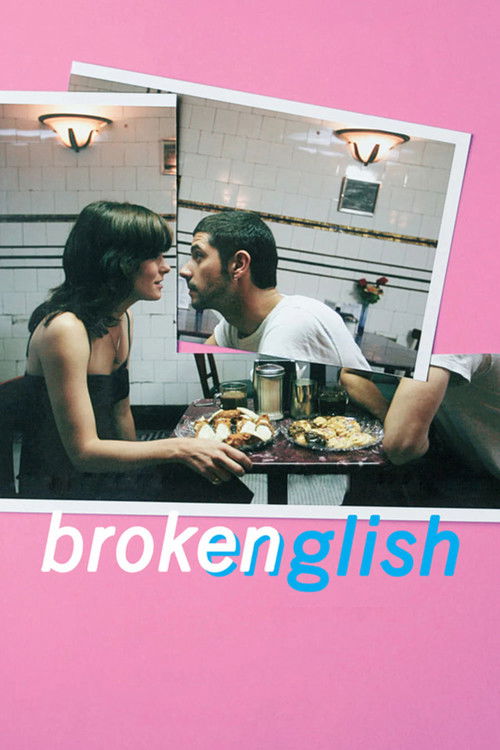
Broken English
Plot
Nora Wilder is freaking out. Everyone around her is either in a relationship, married, or has children, while she's in her thirties, alone with job she's outgrown and a mother who constantly reminds her of it all. Not to mention her best friend Audrey's "perfect marriage". But after a series of disastrous dates, Nora unexpectedly meets Julien, a quirky Frenchman who opens her eyes to a lot more than love.
Get the Weekly Woke Watchlist
New and trending movies scored for woke bias, preachy messaging, and forced political themes — before you waste your evening.
No spam. One useful email per week.
Overall Series Review
Categorical Breakdown
The narrative's central conflict is a universal, personal, and psychological struggle for self-worth and love, not a lecture on systemic oppression or an intersectional hierarchy. Characters are judged entirely on their individual merit and character flaws; the problematic men are villains because they are emotionally unavailable or cads, not because of their race or immutable characteristics.
The movie does not frame American culture as fundamentally corrupt or racist. Its subtle critique is confined to the superficiality and emotional emptiness of the New York dating scene. The idealization of the Frenchman, Julien, and the setting of Paris introduces a mild 'Noble Savage' trope, suggesting that the foreign, European culture offers a more authentic or 'superior' path to romance and personal freedom than the domestic American one.
Nora is not a 'Girl Boss' but an anxious and depressed woman who eventually quits her job, and she is far from a 'Mary Sue' due to her severe emotional flaws. The plot is driven by her deep desire for a relationship and is under pressure from her mother to have a family, which counters the anti-natalist trope. While initial dates with American men are poor, the ideal man, Julien, is portrayed as gentle and protective, representing a complementary male ideal rather than an emasculated one.
The story is exclusively centered on a single woman’s search for a heterosexual relationship and her anxieties surrounding marriage and motherhood. No part of the narrative features centering alternative sexualities, deconstructing the nuclear family, or addressing gender ideology. The structure is entirely normative.
Religion is absent from the core conflict, which is focused on emotional and relational struggles. There is no depiction of religious characters as bigots or of faith as the root of evil. The character conflict implies an acknowledgment of objective good and bad behavior (gentle vs. cad), but the film does not engage with explicit transcendent morality or moral relativism, leaving it at a neutral ground.
Get the Weekly Woke Watchlist
New and trending movies scored for woke bias, preachy messaging, and forced political themes — before you waste your evening.
No spam. One useful email per week.