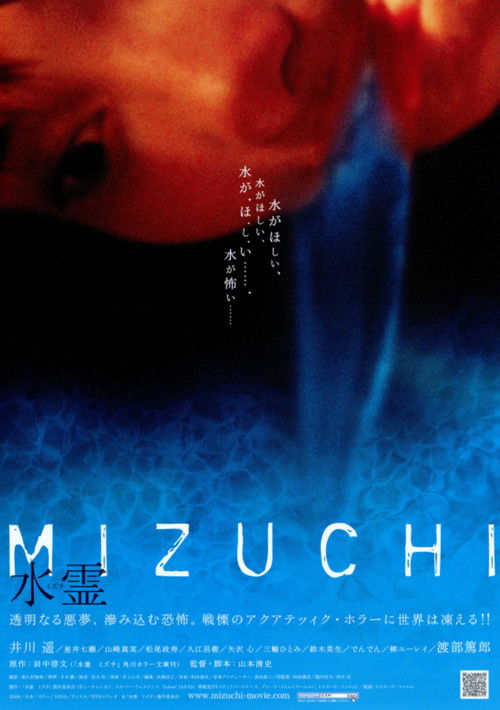
Death Water
Plot
Newspaper correspondent Kyoko Togakure visits a nursing home in the outskirts of Tokyo. She finds the dead body of a resident. It was an apparent suicide. He's holding a piece of paper with the mystifying word "Death Water" written on it. Nearby are blood-stained scissors, and his eyes are squashed. She has no idea that this death is just the beginning of a horrendous nightmare.
Get the Weekly Woke Watchlist
New and trending movies scored for woke bias, preachy messaging, and forced political themes — before you waste your evening.
No spam. One useful email per week.
Overall Series Review
Categorical Breakdown
The narrative is set in Japan with an ethnically homogeneous cast and focuses on a supernatural/environmental threat. The conflict is not defined by race, privilege, or intersectional hierarchy. There is no vilification of 'whiteness' or forced diversity.
The horror is localized to a specific Japanese region (Kanto) and water supply, stemming from a supernatural curse or ancient ruin. This is a specific critique of a local phenomenon or historical trauma, not a blanket hostility toward Western civilization, one's home, or ancestors.
The protagonist, Kyoko Togakure, is a competent professional journalist who drives the investigation. The plot features a subplot about her recent divorce. There is no evidence of the 'Mary Sue' trope, broad emasculation of male characters, or explicit anti-natalist lecturing.
The narrative centers entirely on a supernatural curse, a journalist's investigation, and a heterosexual divorce subplot. Sexual identity is not a primary theme, and the movie does not attempt to deconstruct the nuclear family or lecture on gender ideology.
As a J-Horror film, the plot is centered on a spiritual curse, vengeful spirits, and objective supernatural evil. The presence of a spiritual threat and its consequences implicitly acknowledges a transcendent moral or spiritual law, directly countering moral relativism. The setting in Japan precludes hostility toward Christianity.
Get the Weekly Woke Watchlist
New and trending movies scored for woke bias, preachy messaging, and forced political themes — before you waste your evening.
No spam. One useful email per week.