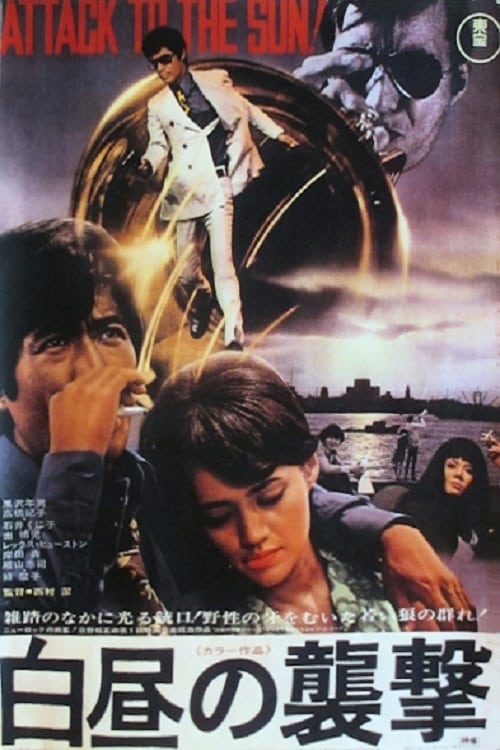
Attack at Daylight
Plot
A truck driver is reunited with friends from his youth in a seedy bar and gets drawn into a web of crime.
Get the Weekly Woke Watchlist
New and trending movies scored for woke bias, preachy messaging, and forced political themes — before you waste your evening.
No spam. One useful email per week.
Overall Series Review
Categorical Breakdown
The film is a Japanese crime drama from 1970, which entirely eliminates the contemporary Western focus on race-based privilege, systemic oppression, or the vilification of 'whiteness.' Character merit and morality are judged by their involvement in the criminal plot and their personal choices.
The setting is the seedy, corrupt underbelly of 1970s Japan, showing a critique of localized moral decay and crime, which is a feature of the genre. The narrative does not contain any hostility toward 'Western civilization' as a whole, nor does it present civilizational self-hatred of the Japanese home culture, as the film is focused on individual moral failure.
Female characters primarily appear in supporting roles, likely as victims, femme fatales, or bar workers connected to the male criminal protagonists. The film's 1970s genre framework does not feature the anachronistic 'Girl Boss' or 'Mary Sue' tropes. Gender roles are traditional or transactional within the context of the criminal environment, not a vehicle for anti-natalist or emasculating messaging. A score of 2 is given to acknowledge potential portrayals of women in a transactional or subordinated role common in crime noir of the era.
As a 1970 Japanese crime film, the narrative does not center alternative sexualities, deconstruct the nuclear family, or contain any form of contemporary 'Queer Theory' or gender ideology lecturing. The focus is exclusively on the truck driver's criminal entanglement.
The film is a secular crime story dealing with moral relativism within a group of criminals. The critique of morality is inherent to the genre's focus on vice and lawlessness, but there is no specific hostility toward religion, especially Christianity, which is the specified target in the definition. The moral vacuum is personal, not an ideological attack on a transcendent moral law.
Get the Weekly Woke Watchlist
New and trending movies scored for woke bias, preachy messaging, and forced political themes — before you waste your evening.
No spam. One useful email per week.