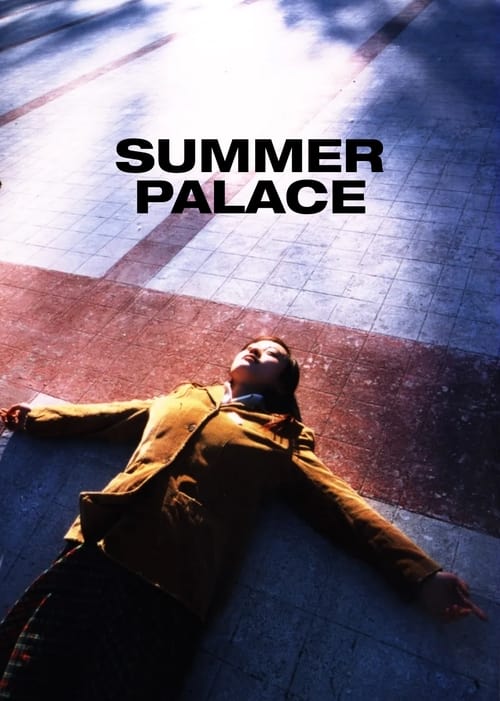
Summer Palace
Plot
Yu Hong leaves her home village and starts university in Beijing, where she develops a consuming and compulsive relationship with another student. The student riots from 1989 then ensue and take a toll on their lives.
Get the Weekly Woke Watchlist
New and trending movies scored for woke bias, preachy messaging, and forced political themes — before you waste your evening.
No spam. One useful email per week.
Overall Series Review
Categorical Breakdown
The film’s central conflict is personal and political, focusing on the emotional lives of Chinese students. Character merit or downfall is based on individual choices and reaction to political trauma, not on race or intersectional hierarchy. There is no critique of ‘whiteness’ or forced diversity, as the cast is ethnically Chinese and historically authentic to the setting.
The movie critiques the established Chinese political and cultural institutions, leading to its ban by state censors. It frames the Chinese state authorities as ‘impersonal vessels of established norms’ and the military crackdown on the student movement as crushing the ‘spirit of hope and youthful rebellion’. The second half depicts the post-crackdown national identity as ‘economically driven, spiritually drained, and psychologically lost,’ which is a strong condemnation of the home culture and its trajectory.
The main protagonist, Yu Hong, is defined by her strong sexual desire and drive, challenging the conservative sexual morals of the time, which is noted as an ‘untypical’ and ‘quasi-feminist’ approach for Chinese screen heroines. The story champions a young woman's sexual liberation and rejection of traditional morality, juxtaposed against a character who represents the older generation's ‘conserved about sex’ values. The plot does not fully conform to the career-driven 'Girl Boss' or anti-natalism tropes, as her life is consumed by the intense romantic and emotional struggle.
The narrative centers almost entirely on the heterosexual relationship between Yu Hong and Zhou Wei, with explicit sex scenes depicting their bond. A friend briefly wonders 'offhandedly if she’s a lesbian' about Yu Hong, but this serves only to highlight the protagonist’s mysterious nature in the eyes of her peers, not as a major narrative theme or a lecture on queer theory. The main focus is normative male-female pairing, albeit in an explicit, liberated context.
The film describes the post-Tiananmen generation as ‘spiritually drained’ and ‘psychologically lost,’ indicating a strong sense of moral and spiritual vacuum following the political upheaval. While it lacks explicit hostility towards a specific religion like Christianity, it embraces a focus on subjective personal desire and sexual freedom as the main expression of vitality, with a rejection of traditional moral structures, placing it firmly toward moral relativism.
Get the Weekly Woke Watchlist
New and trending movies scored for woke bias, preachy messaging, and forced political themes — before you waste your evening.
No spam. One useful email per week.