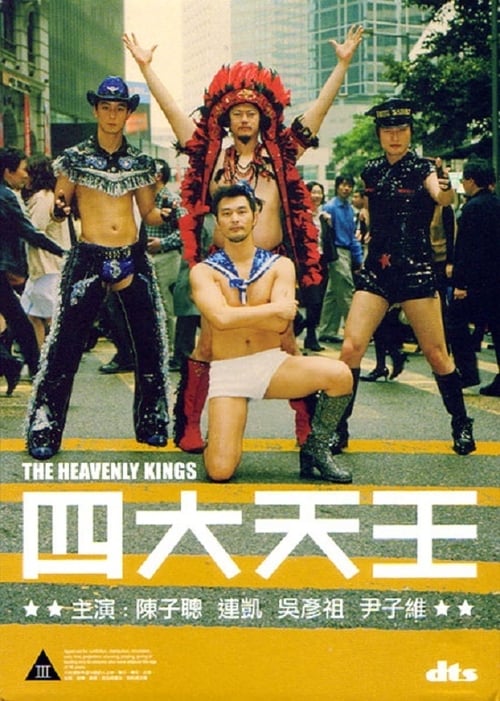
The Heavenly Kings
Plot
Mockumentary about Hong Kong boy band Alive.
Get the Weekly Woke Watchlist
New and trending movies scored for woke bias, preachy messaging, and forced political themes — before you waste your evening.
No spam. One useful email per week.
Overall Series Review
Categorical Breakdown
The movie features an entirely local Hong Kong Chinese cast and focuses on the internal mechanics of the Hong Kong entertainment industry. There is no reliance on immutable characteristics, intersectional hierarchy, or racial politics to drive the plot. The narrative operates entirely outside of the Western-centric lens of identity politics and does not engage in vilification of 'whiteness' or forced diversity.
The film's satirical aim is narrowly focused on the corruption and inauthenticity of the *pop music business* in Hong Kong. It is a critique of a specific commercial system, not a hostility toward Hong Kong or broader Chinese culture, ancestry, or core institutions. The story maintains a universal sense of artistic integrity and commercial ethics, which shows a valuing of local honesty rather than civilizational self-hatred.
The core cast and subjects are the four male members of the boy band. Female characters are primarily in cameo or minor roles, such as journalists or industry figures, and do not drive the main plot. The movie does not engage with 'Girl Boss' tropes, the emasculation of males, or anti-natalist messaging. The gender dynamic is traditional for a boy band film and does not present men or masculinity as toxic or incompetent outside of their lack of genuine singing talent.
The plot centers on the commercial exploitation and mock fame of a male musical group. There is no presence of alternative sexualities, deconstruction of the nuclear family, or any discussion of gender ideology. The sexuality presented is normative, expected for a boy band, and remains private and incidental to the central theme of artistic forgery.
The movie's moral critique is secular, centering on the commercial ethics of 'truth vs. fakery' in show business. The narrative acknowledges a higher moral law of artistic integrity and honesty, but this is framed as a philosophical and ethical concern, not a religious one. There is no hostility toward religion, specifically Christianity, or any embrace of moral relativism that elevates subjective feelings over objective truth.
Get the Weekly Woke Watchlist
New and trending movies scored for woke bias, preachy messaging, and forced political themes — before you waste your evening.
No spam. One useful email per week.