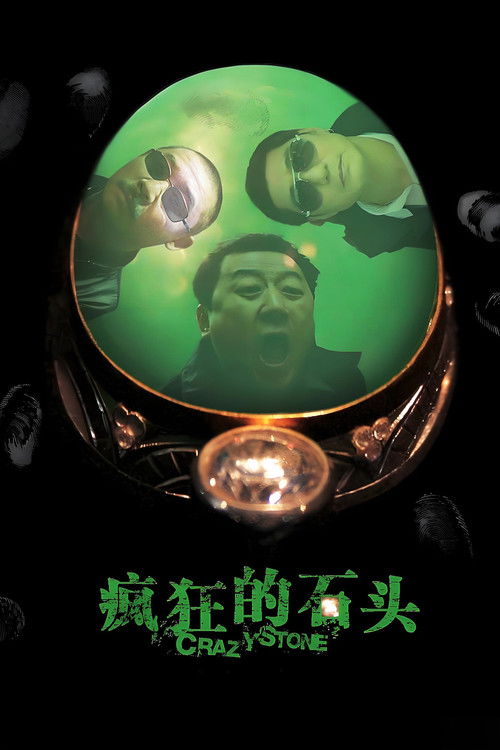
Crazy Stone
Plot
Three thieves try to steal a valuable jade that is tightly guarded by a security chief. But the security guards are not the only obstacle these thieves are facing. An extremely unlucky internationally known master thief is also trying to get a hand on this piece of precious jade. What would be the final destination of this piece of crazy stone?
Get the Weekly Woke Watchlist
New and trending movies scored for woke bias, preachy messaging, and forced political themes — before you waste your evening.
No spam. One useful email per week.
Overall Series Review
Categorical Breakdown
The film's entire cast and setting are Chinese, focusing on class and competence differences between thieves, factory workers, and developers. Character judgments are based on their individual moral failings (greed, incompetence, dedication) and their role in the heist plot, without any intersectional lens or vilification based on immutable characteristics or race-based identity politics.
The setting is a dilapidated factory and an old temple in Chongqing, which serves as a backdrop for a story of social satire targeting contemporary greed and corruption among the powerful and the desperation of the poor. The factory owner is trying to save his enterprise and 200 jobs, suggesting an inherent value in the existing community and institution. The humor critiques modern social absurdities and flawed characters, not the fundamental civilizational heritage or ancestors.
Female characters are few and do not occupy central roles in the action or main heist plotting, though one woman becomes an unwitting pawn in a key plot twist involving the stone. The dynamic is one of traditional male-driven pursuit and bumbling, including a male character who is a lothario and an incompetent fool. The film does not feature a 'Girl Boss' or 'Mary Sue' and contains no anti-natal or anti-family messaging, simply focusing on the chaotic heist.
The narrative makes no reference to sexual ideology, centering alternative sexualities, or gender theory. The core focus is on the theft and protection of the jade. The film presents a normative structure, where male-female pairing is the assumed standard for personal subplots, such as one male character's attempt to impress a woman.
The valuable jade is exhibited in an old temple, which is used as a setting for commercial exhibition and is described as being 'festooned with tacky dancers,' suggesting a critique of the commercialization or secularization of tradition. This is social commentary on the setting, not an attack on religion, especially not anti-Christian themes or a push for moral relativism. The morality is implicitly transcendent, as the characters' greed and deceit are consistently punished by chaotic consequence.
Get the Weekly Woke Watchlist
New and trending movies scored for woke bias, preachy messaging, and forced political themes — before you waste your evening.
No spam. One useful email per week.