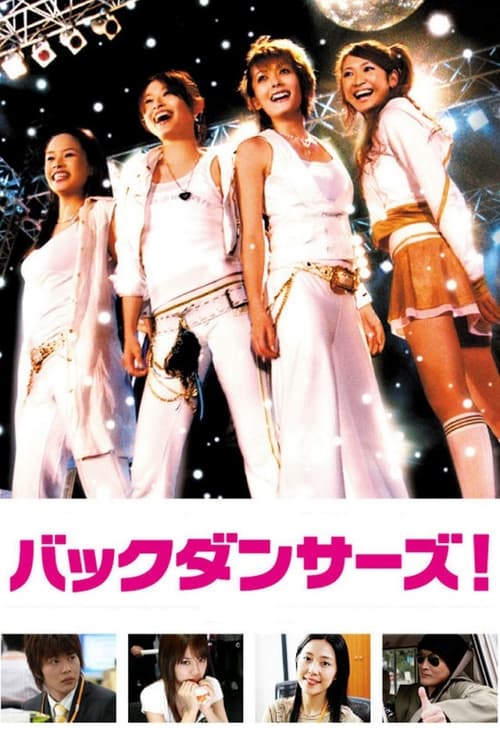
Backdancers!
Plot
A cadre of backup dancers is left astray when their star singer moves on with her life and marriage. They each had their own ambition and hope, which subconsciously rested on the star power of the singer. When plan A does not work, they cling to plan B. When that does not work, in an act of desperation, they are assigned to plan C by their agency. A fight and unprofessionalism seems to put the Backdancers on permanent ice.
Get the Weekly Woke Watchlist
New and trending movies scored for woke bias, preachy messaging, and forced political themes — before you waste your evening.
No spam. One useful email per week.
Overall Series Review
Categorical Breakdown
The movie is set within the Japanese entertainment industry with a cast authentic to its cultural setting. Character success and failure are determined entirely by talent, professional drive, and the unpredictable nature of the business. The narrative relies on universal meritocracy and professional dynamics, not on a critique of race or intersectional power hierarchy.
As a Japanese film focused on the Japanese pop music scene, the movie does not engage in hostility toward Western civilization, one's home, or ancestors. The dramatic conflict is purely internal to the characters and the cultural and business world they inhabit. The film does not frame its home culture as fundamentally corrupt or racist.
While the movie is centered on female ambition, it avoids the 'Girl Boss' extreme. The initial catalyst for the plot is the star singer leaving her career for marriage, and one of the dancers explicitly expresses a desire for marriage, presenting family and career as distinct but valid choices. The male manager is a supportive, ambitious, and ultimately romantic figure, avoiding the trope of emasculated or toxic men. Female leads are competent, but their competence is earned through passion and struggle, not instant perfection.
The narrative focuses on the professional life and heterosexual-normative relationships of the characters (the star singer’s marriage, the manager’s romantic pursuit of a dancer). No alternative sexual or gender ideology is present in the plot. The structure is normative, and the movie contains no lectures on gender theory or deconstruction of the nuclear family.
The movie's themes are entirely secular, focusing on the material world of pop music, ambition, and career. There is no representation of, or hostility toward, religion, especially Christianity. Moral issues center on professional ethics and loyalty, falling under simple moral accountability rather than a subjective 'power dynamics' framework.
Get the Weekly Woke Watchlist
New and trending movies scored for woke bias, preachy messaging, and forced political themes — before you waste your evening.
No spam. One useful email per week.