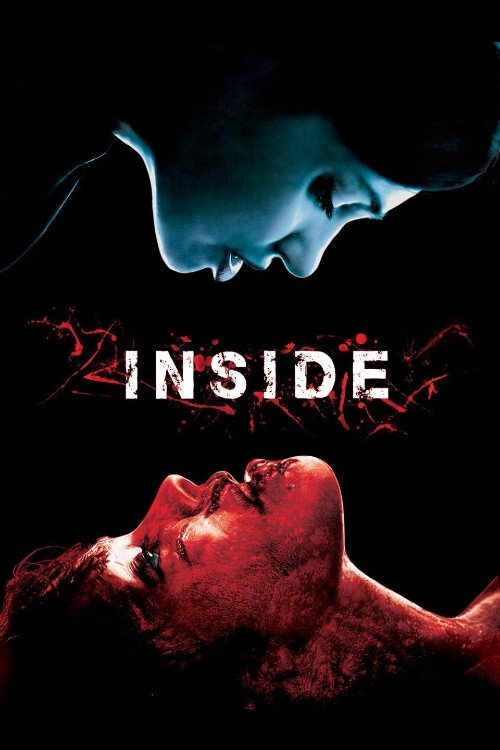
Inside
Plot
Scarred for life after a harrowing near-death experience, emotionally fragile mother-to-be Sarah is still struggling to come to terms with her loss. Overcome with silent grief, Sarah now seeks solace in work; however, she is on a collision course with sheer terror when a knock at the door in the dead of night chills her bones to the marrow. Now, the raven-haired, late-night visitor in black wants something precious from Sarah, and will stop at nothing to get it.
Get the Weekly Woke Watchlist
New and trending movies scored for woke bias, preachy messaging, and forced political themes — before you waste your evening.
No spam. One useful email per week.
Overall Series Review
Categorical Breakdown
The plot centers entirely on a personal feud between two women over an unborn baby. Race or immutable characteristics are not used to establish the conflict or define the main characters. Brief background references to riots, immigrants, and police violence are quickly abandoned as the film focuses on the intense gore within the home, indicating no reliance on intersectional hierarchy or identity-based lecturing.
The central action is a home invasion, which violates the sanctity of the domestic space, but this is presented as a personal act of terror, not an attack on the foundational institutions or ancestors of Western civilization. The external world's chaos, including riots, is simply a narrative device to isolate the protagonist in her home, not a deep critique framing the home culture as fundamentally corrupt.
The conflict is entirely between two women, and the male characters (husband, editor, police) are either already dead or quickly dispatched, rendering them completely ineffectual. The narrative deconstructs traditional notions of motherhood, portraying the protagonist as ambivalent or lacking in 'maternal spirit,' and the antagonist is a psychotic, unrelenting force of nature who achieves her goal through pure aggression. This subverts the idea of traditional female complementarity and celebrates a dark, emasculating form of feminine power.
The narrative is silent on alternative sexualities, gender identity, or queer theory. The central conflict is intensely focused on the biological and visceral reality of female fertility and the act of birth. Traditional male-female pairing and the nuclear family are challenged only by the husband's death, not by any lecturing on non-normative structures.
The film is set on Christmas Eve, a Christian holiday, but religion plays no role in the plot, conflict, or character motivations. The nihilistic worldview is a byproduct of the extreme, secular violence, not a direct hostility or vilification of a specific traditional faith. The moral framework is one of amoral, subjective depravity and primal impulse, creating a spiritual vacuum without explicit anti-theist messaging.
Get the Weekly Woke Watchlist
New and trending movies scored for woke bias, preachy messaging, and forced political themes — before you waste your evening.
No spam. One useful email per week.