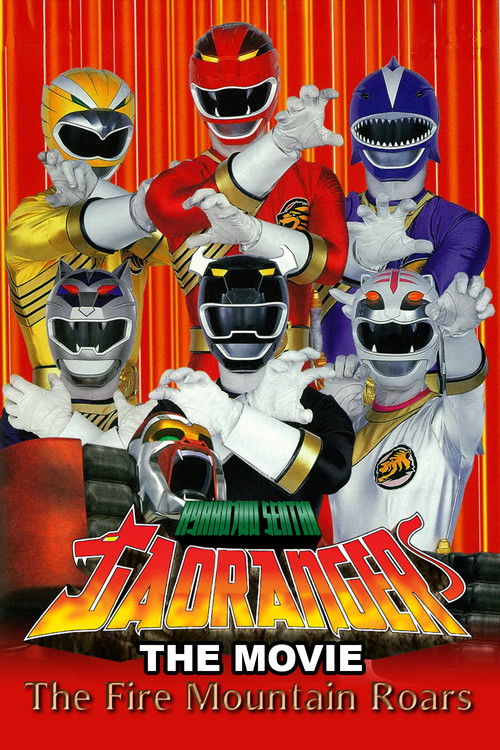
Hyakujuu Sentai Gaoranger: The Fire Mountain Roars
Plot
The six Gaoranger were fighting the Orgs as usual, but a strong impulse pulled them along with Tetomu into a rift in space-time. They arrived in Org Island, a volcanic island in another dimension that is ruled by the Orgs. To regain the island's freedom, the Gaorangers joined forces with the island's resistance to face off against the three Org Brothers.
Get the Weekly Woke Watchlist
New and trending movies scored for woke bias, preachy messaging, and forced political themes — before you waste your evening.
No spam. One useful email per week.
Overall Series Review
Categorical Breakdown
The plot centers on a traditional morality of good versus evil, where the heroes fight literal monster-ogres (Orgs) to liberate an enslaved native population. All heroes and antagonists are judged solely on their merit, courage, and moral alignment. There is no focus on race, immutable characteristics, or intersectional hierarchy. The story contains no political lectures on systemic oppression or privilege.
The film is a Japanese production concerned with the protection of life and the environment from a demonic, external threat (the Orgs). The narrative celebrates the ancient power of the 'Gao Warriors' and their spiritual connection to the 'Power Animals.' There is no hostility toward the home culture, its institutions, or its ancestors; rather, it honors the legacy of those who fought chaos.
The team includes female members who are active and powerful heroes, fighting alongside the male members as equals in combat. Princess Iriya leads the island’s resistance, demonstrating strong female leadership. This is a case of strong characters, not a 'Girl Boss' trope, as the narrative maintains a traditional, complementary structure without emasculating the male characters or including anti-natalist/anti-family messaging.
The movie adheres to a normative structure traditional for a 2001 children's superhero film. The core conflict and character dynamics are focused entirely on action, teamwork, and the defeat of the villainous Orgs. The narrative does not contain or center on alternative sexualities, deconstruct the nuclear family, or promote gender ideology.
The core of the conflict involves a spiritual battle between the forces of good (the Gaorangers, Power Animals, and 'GaoGod') and the demonic forces of evil (the Orgs). 'GaoGod' is presented as an ultimate power for good, providing a foundation for transcendent morality and objective truth. Faith and spiritual forces are a source of strength for the heroes.
Get the Weekly Woke Watchlist
New and trending movies scored for woke bias, preachy messaging, and forced political themes — before you waste your evening.
No spam. One useful email per week.