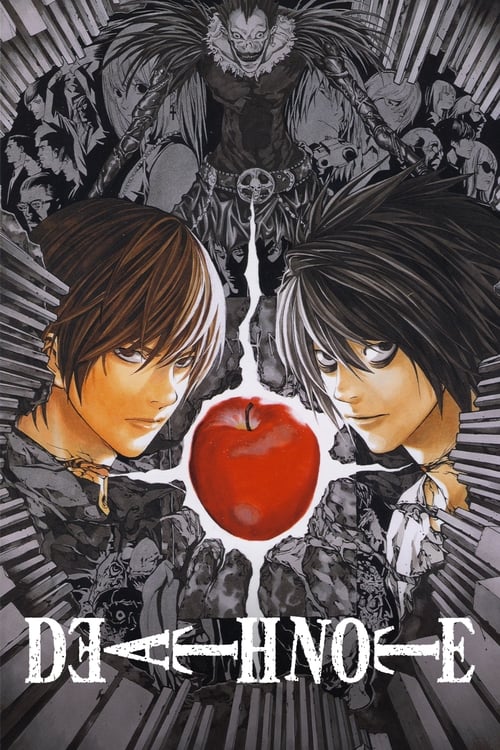
Death Note
Season 1 Analysis
Season Overview
No specific overview for this season.
Season Review
Categorical Breakdown
The central conflict is a high-stakes battle of wits between two intellectually gifted individuals, Light and L. Success and failure are determined entirely by strategic intelligence, not by race, gender, or immutable characteristics. All major characters, both good and evil, are judged purely by their merit and moral choices.
The protagonist's motivation is to cleanse the entire world of crime and create a utopia, which is a critique of universal human corruption and the failures of abstract justice systems, not a specific attack on Japanese or Western civilization. The story does not frame its home culture as fundamentally corrupt or demonize its ancestors.
The most significant female characters, such as Misa Amane, are written as highly subservient, hyper-obsessed love interests whose main motivation is devotion to Light. Other intelligent female characters like Naomi Misora are sidelined or written out after choosing domestic life over a career. The writing actively avoids the 'Girl Boss' trope, showing the distinct and non-competitive roles of men and women.
Alternative sexualities and gender ideology are completely absent from the narrative. The dynamics revolve around traditional male-female pairing and family structures without any attempt to deconstruct them or use the series as a platform for political commentary on sexual identity.
The entire premise rests on the main character, Light, rejecting the authority of the law and attempting to establish himself as a divine judge. He embraces moral relativism, creating a new subjective moral law based on his power, fully embodying the idea that 'Morality is subjective power dynamics.' Light's goal is to become the new 'God' of his crime-free world, which challenges the idea of a transcendent moral order.