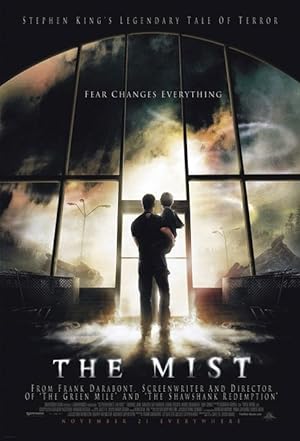
The Mist
Plot
The Draytons - David, Steff and their son Billy - live in a small Maine town. One night a ferocious storm hits the area, damaging their house. The storm is accompanied by a strange mist the following morning. David and Billy and their neighbour Brent Norton go into town and find themselves trapped in a grocery store with several other people. There they discover that the mist contains something frightening and intent on killing humans.
Get the Weekly Woke Watchlist
New and trending movies scored for woke bias, preachy messaging, and forced political themes — before you waste your evening.
No spam. One useful email per week.
Overall Series Review
Categorical Breakdown
Characters are judged primarily by their response to the crisis, aligning with meritocracy and rational/irrational decision-making. The central conflict between the two male leaders is based on a pre-existing legal dispute, not race. The diverse ensemble cast is defined by their moral choices, not immutable characteristics.
The narrative directly illustrates that 'civilized society' is a thin veneer that instantly dissolves into chaos, mob rule, and base instinct once the comforts of modern life are removed. The small-town American community rapidly descends into xenophobia and an 'us-them' mentality, portraying the home culture as fundamentally corruptible and fragile.
The main human antagonist is female, a zealot who is clearly depicted as insane and destructive, not as a perfect or competent 'Girl Boss.' Masculinity is portrayed as a necessary, though flawed, protective force through the protagonist and his rational allies. A key early scene celebrates motherhood, showing a woman's fierce, non-negotiable maternal duty overriding self-preservation.
The narrative contains no exploration of alternative sexualities or gender ideology. Characters' sexuality is backgrounded or shown in traditional, normative pairings. The focus remains strictly on survival, faith, and loss of human order.
The core human conflict is driven by a fanatical Christian woman who quickly morphs into a destructive cult leader demanding human sacrifice. Traditional religion is explicitly linked to madness, superstition, and the murder of dissenters, with the narrative presenting it as the primary internal threat to the survivors. This framing strongly aligns with the trope of traditional religion being the root of evil.
Get the Weekly Woke Watchlist
New and trending movies scored for woke bias, preachy messaging, and forced political themes — before you waste your evening.
No spam. One useful email per week.