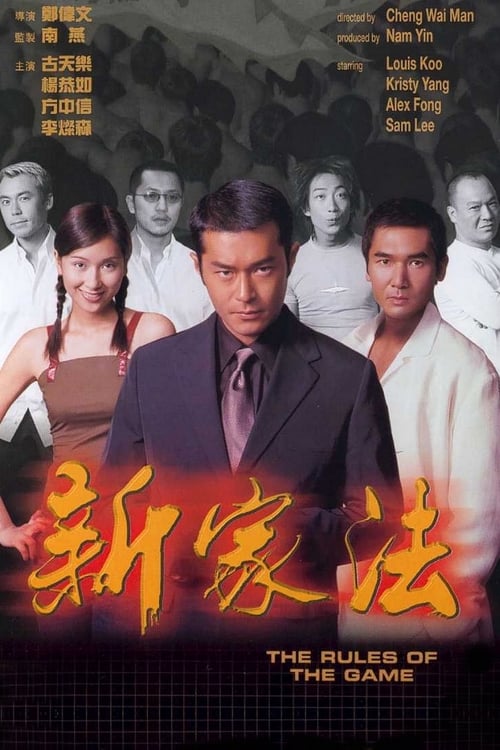
The Rules of the Game
Plot
David Chow infiltrates a gang to take revenge on a triad boss, Shing. His close friend, Chun, was beaten so brutally by Shing that he was left paralyzed. To add to his pain, David’s crush, Ann, chooses to date Shing instead of him. Therefore, David joins Shing’s gang under the pretense of seeking wealth and a better future. Secretly, he plans his revenge against Shing.
Get the Weekly Woke Watchlist
New and trending movies scored for woke bias, preachy messaging, and forced political themes — before you waste your evening.
No spam. One useful email per week.
Overall Series Review
Categorical Breakdown
The film is a Hong Kong production and features a full East Asian cast appropriate for the setting. The conflict is based on personal revenge and the hierarchy of a criminal syndicate, with no reference to race, whiteness, privilege, or systemic oppression in the sense of intersectional theory. Meritocracy within the criminal organization's own violent structure determines character rise, not immutable characteristics.
The narrative is set in the Hong Kong criminal underworld, which is a critique of criminal sub-culture, not a broad indictment of a 'Western home culture' or 'Western civilization.' The film does not display self-hatred toward a national or civilizational identity; rather, it explores the internal moral corruption of the triad world.
The female lead, Ann, is a primary object of the conflict between the men and has a role that requires her to controversially align with the man who injured her friend. This scenario is a melodramatic device, not an expression of the 'Girl Boss' or 'Mary Sue' trope. The plot is heavily male-centric, focusing on male ambition and revenge. It avoids the anti-natalist message, but the dark, crime-driven gender dynamics prevent a high complementarian score. The score remains low because it completely lacks the specific 'woke' feminist tropes (Girl Boss/emasculation/anti-natalism) outlined in the 10/10 definition.
The core relationships and conflicts revolve entirely around male-male friendship, heterosexual rivalry, and gang power. The film maintains a normative structure where the traditional male-female pairing is the standard romantic focus. There is no presence of 'queer theory,' centering of alternative sexualities, or lecturing on gender ideology.
The film's focus is on action, crime, and melodrama, not theological or philosophical debate. Morality is subjective in the sense that the characters operate in a nihilistic criminal environment where 'everyone has their reasons' for violence and betrayal. However, this is a thematic element of the genre and not a polemical attack on traditional religion or Christianity, which is entirely absent from the plot.
Get the Weekly Woke Watchlist
New and trending movies scored for woke bias, preachy messaging, and forced political themes — before you waste your evening.
No spam. One useful email per week.