Prodigy
Plot
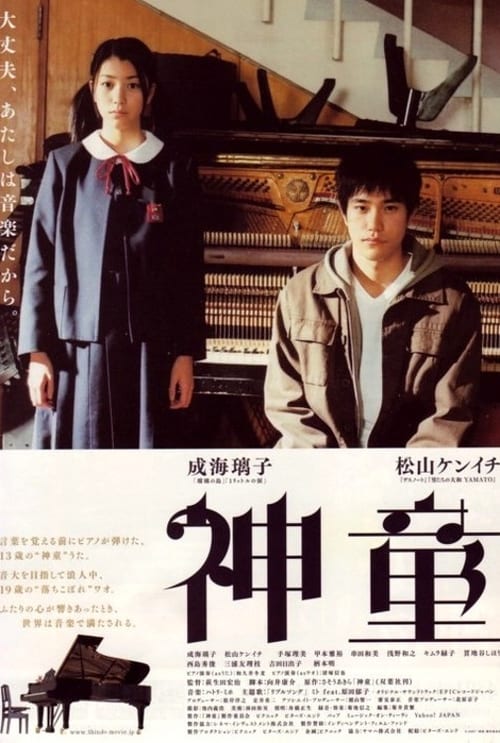
Naruse Uta is a "unique" 13 year old child. She possessed the talent to read sheet music even before she could speak, but has now come to the point where she hates playing the piano. Her father was also a piano virtuoso, but mysteriously disappeared from her life at a young age. Because of her father's disappearance Uta's mother had to move out of their posh home and into a far modest working class neighborhood. In this working class neighborhood there is a local grocer. The grocer's son Kikuna Oto happens to be a budding musician, but lacks the drive to truly succeed. That is until Uta Naruse comes into his life...
Get the Weekly Woke Watchlist
New and trending movies scored for woke bias, preachy messaging, and forced political themes — before you waste your evening.
No spam. One useful email per week.
Overall Series Review
Categorical Breakdown
The plot prominently features a class-based hierarchy, driving the story by contrasting a 'posh home' with a 'modest working class neighborhood.' The narrative judges the former by its failure (Uta's father's disappearance, losing the home) and frames the latter as a necessary environment for the heroine's re-emergence. This heavy reliance on socioeconomic status and environment, rather than purely individual merit, serves as a central intersectional lens.
The film does not engage in civilizational self-hatred toward Japanese heritage. The critique is internal and limited to the failure of the elite class (represented by the absent father and lost wealth). The new, modest neighborhood is a place where new, organic growth and inspiration can occur, suggesting a balanced view of culture that simply critiques the wealthy urban sphere's superficiality, but the institutions of family (mother/daughter bond) remain a source of strength.
Uta Naruse is the perfect, instantly gifted 'prodigy' who carries the drama's premise. The male character, Kikuna Oto, is explicitly defined by his lack of ambition, which is remedied only 'until Uta Naruse comes into his life.' This positions the female lead as the inherently superior catalyst and savior, subscribing to the 'Girl Boss' trope by making the male counterpart a bumbling idiot who requires the female's perfection to succeed.
The narrative is a traditional drama centered on a boy and a girl in a platonic or burgeoning romantic relationship, and it focuses on the internal struggle with music and class. There is no evidence of centering alternative sexualities, deconstructing the nuclear family outside of the father's disappearance, or promoting gender ideology in the plot's main themes.
The core conflict is secular, revolving around music, a prodigy's talent, family loss, and socioeconomic environment. The narrative contains no discussion of or hostility toward traditional religion, nor does it promote a philosophy of moral relativism. Objective Truth, if acknowledged, is tied to the transcendent quality of the music itself.
Get the Weekly Woke Watchlist
New and trending movies scored for woke bias, preachy messaging, and forced political themes — before you waste your evening.
No spam. One useful email per week.