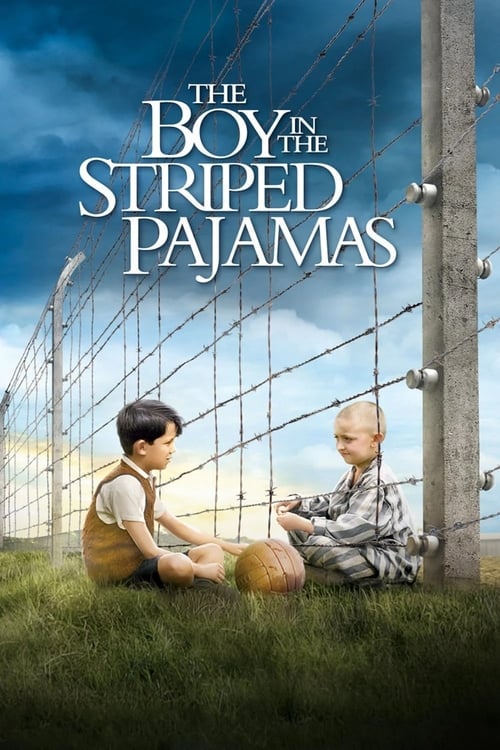
The Boy in the Striped Pyjamas
Plot
When his family moves from their home in Berlin to a strange new house in Poland, young Bruno befriends Shmuel, a boy who lives on the other side of the fence where everyone seems to be wearing striped pajamas. Unaware of Shmuel's fate as a Jewish prisoner or the role his own Nazi father plays in his imprisonment, Bruno embarks on a dangerous journey inside the camp's walls.
Get the Weekly Woke Watchlist
New and trending movies scored for woke bias, preachy messaging, and forced political themes — before you waste your evening.
No spam. One useful email per week.
Overall Series Review
Categorical Breakdown
The movie is a direct indictment of the Nazi regime's ideology, which is an extreme form of race-based identity politics. The hero, Bruno, is judged by the content of his soul, and his friendship with Shmuel demonstrates a universal meritocracy that rejects prejudice. The primary villains are the white male Nazi officers, but this vilification is specific to their role as perpetrators of historical evil, not a blanket condemnation of a demographic. Casting is historically authentic for the period.
The film frames the German culture under the Nazi regime as fundamentally corrupt and evil, condemning the nation's political institutions and its complicity in genocide. The SS officer father is demonized for his actions. However, the film provides a moral compass through the German grandmother's outspoken disapproval and Bruno's innate sense of right and wrong. The critique is focused on a specific, atrocious political system rather than a broad hatred of 'Western civilization' or ancestry.
Gender roles are mostly traditional. The mother's arc involves deep distress over her husband's work and a desire to protect her children, embodying a protective motherhood figure, not a 'Girl Boss.' Her suffering highlights the cost of complicity to the family unit. The men in power are depicted as toxic and cruel, with the patriarch being an active agent of evil. There is no anti-natal or anti-family messaging outside of the context of the regime's destruction of the nuclear unit.
The narrative has no focus on alternative sexualities, gender ideology, or queer theory. The central family unit is the traditional male-female pairing. The story's themes are entirely concerned with the historical issues of war, race, innocence, and genocide, keeping the subject of sexuality entirely private and normative for the era depicted.
The film operates on a strong, objective moral framework where the actions of the Nazis are unequivocally evil. Bruno's friendship with Shmuel is driven by an innate, transcendent moral law—a simple human goodness—which stands in direct opposition to the Nazi ideology. Traditional religion is not targeted as the root of evil; instead, the Nazi political ideology is portrayed as the corrupting force that creates a spiritual vacuum.
Get the Weekly Woke Watchlist
New and trending movies scored for woke bias, preachy messaging, and forced political themes — before you waste your evening.
No spam. One useful email per week.