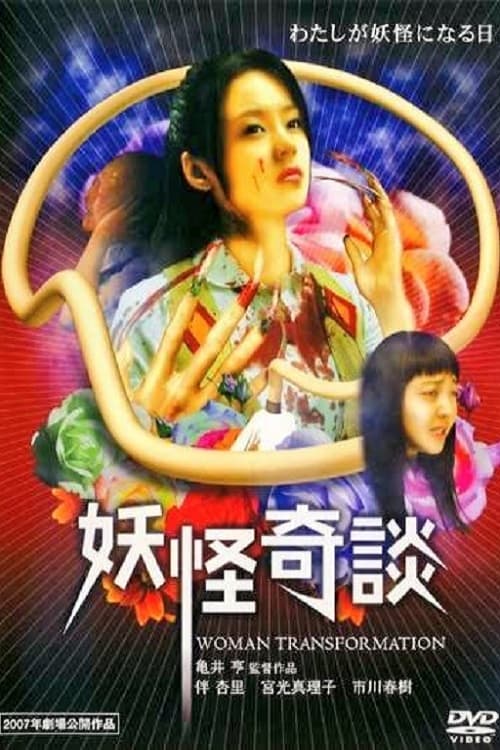
Woman Transformation
Plot
Kamei mixes humour, drama and, in this occasion, bits of horror to visualize the physical transformation in yôkai that the three main actresses undergo. Mihiro Iwasaki (Anri Ban) is a model extremely preoccupied by how others look at and think of her. Then, her nails start growing disproportionately until they become killing weapons. Michiko Yamane (Mariko Miyamitsu) is an unsociable university student and part-time worker in her early twenties only crazy for a hobby. At night she becomes a rokurokubi (female yokai with an extremely long and flexible neck). Finally, Mana Saeki (Haruki Ichikawa) is a last year junior high school student with a very bad character and very distrustful of all her friends, who metamorphoses into a nopperabo (yokai without face).
Get the Weekly Woke Watchlist
New and trending movies scored for woke bias, preachy messaging, and forced political themes — before you waste your evening.
No spam. One useful email per week.
Overall Series Review
Categorical Breakdown
The movie is a Japanese production rooted in Japanese folklore (yōkai) and features an ethnically authentic cast. The story does not contain any themes of Western race hierarchy, vilification of whiteness, or forced insertion of diversity. Characters are judged by the consequences of their psychological flaws and monstrous transformations.
The cultural critique is internal, focusing on the superficiality and prejudice of contemporary Japanese society. The film does not exhibit hostility toward Western civilization, its ancestors, or core institutions. The narrative remains focused on East Asian cultural folklore.
The core plot focuses intensely on womanhood and the pressures of appearance and isolation, but this leads to monstrous transformation and suffering, not 'Girl Boss' empowerment. The female characters are victims of their own psychological turmoil and external judgment, which subverts the trope of the instantly perfect female lead. There is no explicit anti-natalist or anti-family messaging, but the focus is on personal dissolution.
The narrative centers on physical body horror and psychological distress manifesting as folkloric monsters (yōkai). There is no focus on centering alternative sexualities, deconstructing the nuclear family, or lecturing on modern gender ideology. Sexuality is not a theme in the film.
The premise of the film relies entirely on the existence of yōkai, which are supernatural beings from Japanese folklore, thereby acknowledging a spiritual or mythological realm. The film does not contain any direct criticism or hostility toward traditional Western religion, specifically Christianity.
Get the Weekly Woke Watchlist
New and trending movies scored for woke bias, preachy messaging, and forced political themes — before you waste your evening.
No spam. One useful email per week.