Midori
Plot
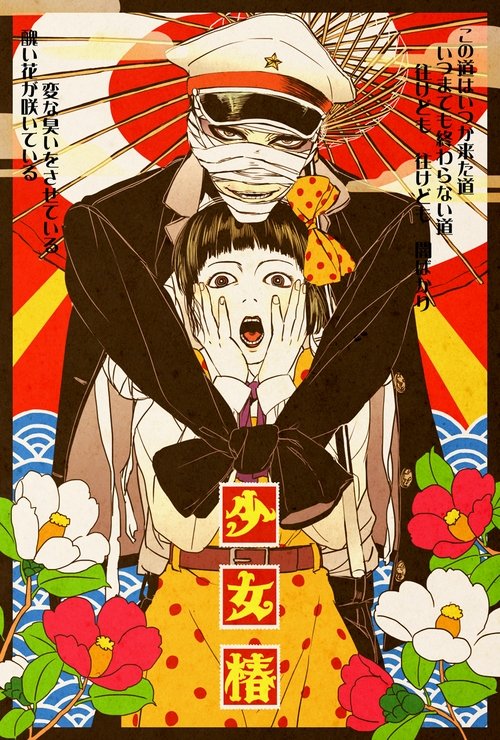
After losing her parents, young flower selling Midori is put up by a fairground group. She is abused and forced to slavery, until the arrival of an enigmatic magician of short stature, who gives her hope for a better future.
Get the Weekly Woke Watchlist
New and trending movies scored for woke bias, preachy messaging, and forced political themes — before you waste your evening.
No spam. One useful email per week.
Overall Series Review
Categorical Breakdown
The movie is a Japanese production set in a specific Japanese cultural and historical context. The conflict is driven purely by the power dynamics between abusers and a victim (an orphan child in slavery), not by race or Western-centric concepts of intersectional hierarchy. No whiteness is present to be vilified, and character merit is irrelevant in a story about unrelenting trauma and victimization.
The film depicts a dark and horrific aspect of society (a freak show), but the focus is on a localized, marginalized environment, not a broad condemnation of Japanese civilization, history, or ancestors. The narrative is a specific tale of depravity and neglect, not a deconstruction of the home culture's heritage or a lecture on its fundamental corruption.
The main character is a perpetual victim of sexual and physical abuse, representing the opposite of the 'Girl Boss' or 'Mary Sue' trope. Male characters are overwhelmingly depicted as predators, but this is a function of the story’s extreme horror genre, not a political statement about emasculation or gender complementarianism. Motherhood and family are absent or associated with death and abandonment, but the messaging is thematic horror, not an anti-natalist lecture favoring career fulfillment.
One character, an intersex individual ('hermaphrodite'), is portrayed as an abusive villain and rapist. This character is used to embody the grotesque cruelty of the freak show environment, and this portrayal is a demonization of an alternative sexuality rather than a positive 'centering' of queer theory or ideology. The narrative adheres to a normative structure by making the abnormal a source of horror and abuse.
The story takes place in a world devoid of moral order and spiritual comfort, a complete spiritual vacuum. However, there is no narrative voice that explicitly criticizes or attacks traditional religion, such as Christianity. No religious characters are presented as hypocritical villains, and morality is subjective only in that the characters themselves are amoral, not because the plot exists to lecture on moral relativism as a political concept.
Get the Weekly Woke Watchlist
New and trending movies scored for woke bias, preachy messaging, and forced political themes — before you waste your evening.
No spam. One useful email per week.