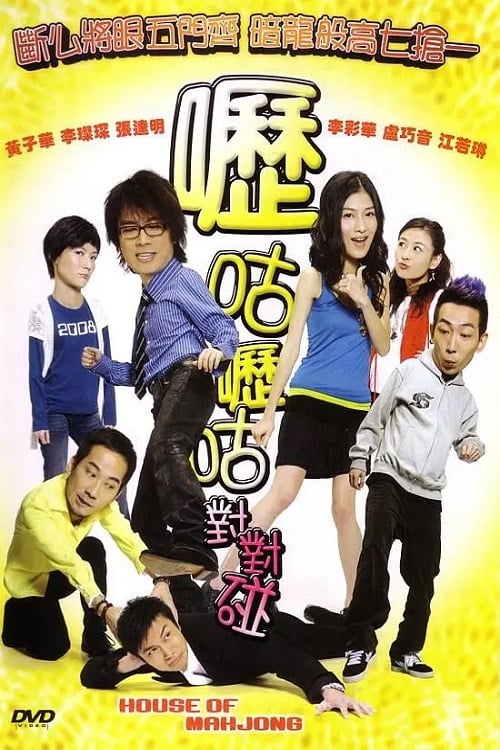
House of Mahjong
Plot
Gi, who wants to start up her business in Fu Gui Mall, needs to learn to play Taiwan mahjong to be part of the tenants there. All the other tenants teach her the techniques of the game but Fu Ho defeats Gi. However, he is impressed with her determination and rents a place to Gi. Meanwhile, Fu Ho's son, Sun Gui, returns to Hong Kong and is planning to take over the mall. He finds four mahjong experts to gamble with the tenants. Gi, Sam, Lam and the others lose their money and means of survival. Luckily, Lam finds
Get the Weekly Woke Watchlist
New and trending movies scored for woke bias, preachy messaging, and forced political themes — before you waste your evening.
No spam. One useful email per week.
Overall Series Review
Categorical Breakdown
The film is a Hong Kong production with an ethnically authentic Chinese cast and a localized plot about a community struggle in a mall. Character value is based on skill in mahjong and loyalty to the community. There is no critique of 'whiteness,' nor is there an emphasis on intersectional hierarchy or identity group lecturing.
The movie is a Hong Kong comedy focused on the local culture and community around the game of mahjong. The core theme is the defense of a local, traditional way of life (the existing community in the mall) against a greedy, modernizing force (the landlord's son). There is no element of hostility toward Western civilization, its ancestors, or core institutions.
The female lead, Gigi, is a central character who must work hard and learn the game of mahjong to save her shop, which counters the 'perfect instantly' Mary Sue trope. However, she is explicitly introduced as a 'sexy new tenant' and her presence creates strife and jealousy among the male and female characters based on her attractiveness, suggesting a focus on traditional sexual dynamics and the male gaze common in its era's comedy. Motherhood and natalism are not themes in the plot.
The narrative focuses on traditional romantic and competitive male-female dynamics revolving around the new female lead, Gigi. There is no presence of 'Queer Theory,' deconstruction of the nuclear family, or centering of non-normative sexual identity or gender ideology.
The movie's plot is entirely secular, centered on the game of mahjong and a real-estate/gambling conflict. There is no religious element, no hostility shown toward any religion, and the moral conflict is a simple, non-spiritual battle between good-natured tenants and a greedy villain, adhering to a simple objective moral truth of community loyalty and fairness.
Get the Weekly Woke Watchlist
New and trending movies scored for woke bias, preachy messaging, and forced political themes — before you waste your evening.
No spam. One useful email per week.