Game of Thrones
Season 2 Analysis
Season Overview
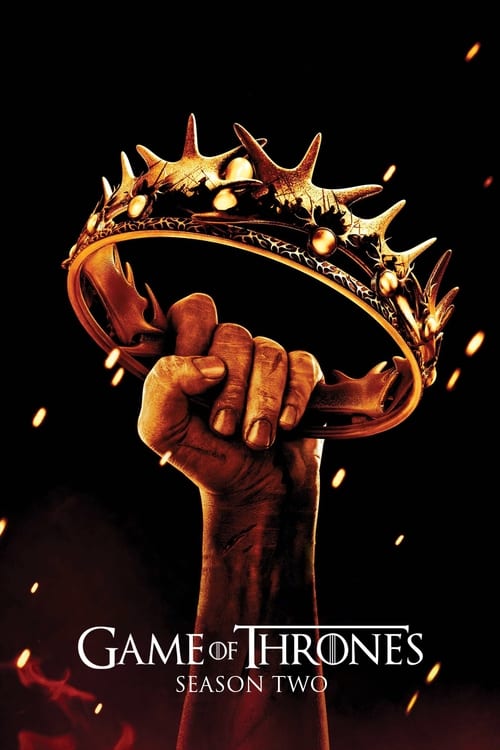
The cold winds of winter are rising in Westeros...war is coming...and five kings continue their savage quest for control of the all-powerful Iron Throne. With winter fast approaching, the coveted Iron Throne is occupied by the cruel Joffrey, counseled by his conniving mother Cersei and uncle Tyrion. But the Lannister hold on the Throne is under assault on many fronts. Meanwhile, a new leader is rising among the wildings outside the Great Wall, adding new perils for Jon Snow and the order of the Night's Watch.
Season Review
Categorical Breakdown
Characters are judged primarily by their competency and will to power, not by intersectional rank or immutable characteristics. Tyrion's status as a dwarf is a major adversity he must overcome with his intellect, showcasing meritocracy of mind over physical traits. Daenerys' storyline in Qarth is one of weakness and learning to leverage her status as the Mother of Dragons. Casting in Westeros is homogenous, but the narrative does not rely on vilifying 'whiteness' as a lecture on systemic oppression.
The dominant Westerosi society is relentlessly depicted as brutal, corrupt, and governed by selfish feudal lords. The narrative critiques the violence of human power structures in general, but does not elevate any foreign or 'other' culture—such as the Ironborn or the Qartheen merchants—as a 'Noble Savage' alternative that is spiritually superior. Ancestors and noble houses are frequently shown as flawed, but this is a cynical realism about history, not a civilizational self-hatred.
Female characters possess enormous political agency and power, particularly Cersei Lannister and Catelyn Stark. They are complex, ambitious, and deeply flawed, avoiding the 'Mary Sue' trope. Arya and Brienne reject traditional female roles, but their struggle is presented as personal and earned, not as an instant 'Girl Boss' status. Motherhood, as a force of nature and protection, is a primary motivator for several characters.
The gay relationship between Renly Baratheon and Loras Tyrell is an open secret and a critical factor in Renly's claim to the throne, which explicitly centers non-normative sexuality in a major political plot. The relationship is a key source of vulnerability and political compromise, moving away from a strictly private sexuality but not resulting in any broader philosophical lecturing or deconstruction of the nuclear family as a societal goal.
The traditional faith of Westeros, the Faith of the Seven (a proxy for Christianity), is shown to be a passive institution that is easily co-opted or disregarded by political forces. In contrast, the fanatical, dualistic cult of the Lord of Light is introduced through Melisandre, who wields dark, undeniable magic and performs morally horrifying acts. This narrative choice frames the only 'active' religion as dangerous and the traditional faith as ineffectual, strongly endorsing the view that morality is subjective and transcendent faith is either powerless or evil.