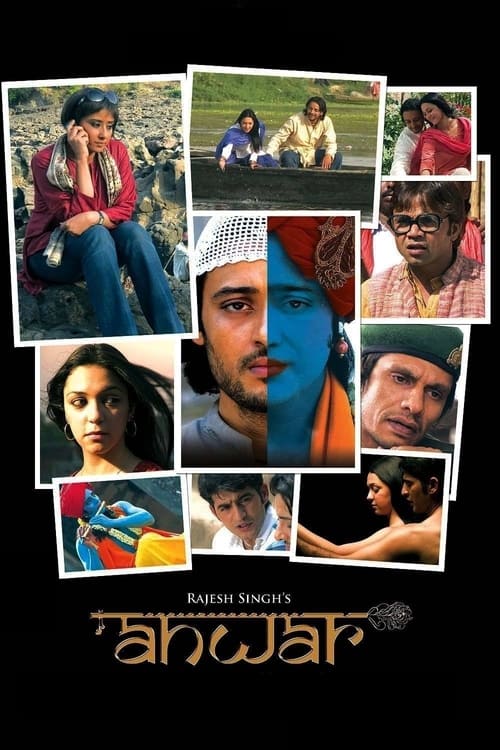
Anwar
Plot
Anwar is the story of a young man, an artist, who leaves his home and everything he knows in order to escape a world he no longer recognizes. All he ever wanted was a love story, Instead, his mentor abandons him and his best friend and his one true love betray him. Devastated, emotionally exhausted, he takes refuge in an old building, only to wake up the next morning to find his world turned upside down. Mistaken for a terrorist, Anwar finds himself in the midst of an unusual set of circumstances that resonate deeply with the modern Indian Condition and indeed with the Human Condition in this present-day global village.
Get the Weekly Woke Watchlist
New and trending movies scored for woke bias, preachy messaging, and forced political themes — before you waste your evening.
No spam. One useful email per week.
Overall Series Review
Categorical Breakdown
The plot's central conflict is driven by the main character's Muslim identity, which makes him vulnerable to immediate profiling and systemic oppression by the police and political forces. The narrative exists to expose the 'communal tensions' and the 'mindset of the majority' that views a minority group as an immediate threat. The film explicitly showcases how religious identity is politicized and overshadows individual merit, placing the blame for the tragedy squarely on group-based prejudice and political games.
The movie heavily critiques the existing political and social institutions of the home country (India). Politicians are depicted as cynical, power-hungry manipulators who exploit religion for votes, and the police force is shown to be complicit in framing an innocent man. The female lead expresses a desire to leave the country because she is tired of the poverty and struggle of her home. However, the protagonist himself is a Muslim scholar researching ancient Hindu temples, suggesting reverence for the spiritual ancestry is maintained, though the current state of society is viewed as fundamentally corrupt.
The female lead is ambitious and is determined to prioritize her future by moving to the United States, suggesting a rejection of the local, traditional life for personal career fulfillment. However, the central narrative does not focus on a 'Girl Boss' or female empowerment arc, nor does it generally emasculate the male characters. Her choices ultimately lead to tragedy for herself and the men in her life.
The primary love story is a normative heterosexual pairing, though it is an interfaith romance. The narrative is focused entirely on political corruption, religious tension, and tragic love. There is no presence of alternative sexual ideologies, centering of LGBTQ+ characters, or lecturing on gender theory.
The film strongly criticizes the *politicization* and *misuse* of religion as a tool for hatred and communal violence, demonstrating how 'religion and politics kill' love. Corrupt characters and mob mentality use religion as a shield for bigotry. However, the protagonist, Anwar, is a spiritual character, seen practicing his faith and researching Hindu temples with deep reverence, suggesting that genuine individual faith and transcendent devotion are respected, while weaponized, organized religion is condemned.
Get the Weekly Woke Watchlist
New and trending movies scored for woke bias, preachy messaging, and forced political themes — before you waste your evening.
No spam. One useful email per week.