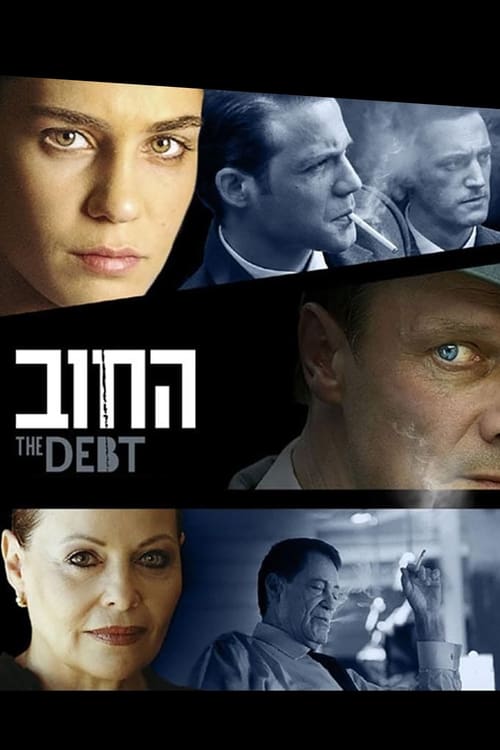
The Debt
Plot
The year is 1964. Rachel Brener is one of 3 young Mossad agents teem who caught "THE SURGEON OF BIRKENAU" - a Nazi monster who was never brought to trial in Israel. The official reason was that he was shot to death while trying to escape from Israeli captivity in a safe house somewhere in Europe. 30 years after, the well communicated death story of the monster could be questionable, a small article appears in a local unimportant paper in a small town in Ukraine. Surprisingly the Surgeon is ALIVE and is willing to admit his crimes against the human race and especially the Jews. The 3 older x Mossad agents who are in their late 60th became aware to this unfortunate threatening knowledge. The fact was that the "Surgeon" managed to escape from his guards 30 years ago.
Get the Weekly Woke Watchlist
New and trending movies scored for woke bias, preachy messaging, and forced political themes — before you waste your evening.
No spam. One useful email per week.
Overall Series Review
Categorical Breakdown
The central conflict is based on a specific, non-intersectional, historical ethno-national struggle: Israeli agents (Jewish) seeking justice against a German Nazi war criminal. Character actions and fate are dictated by their mission and personal moral compromises, not by their race or immutable characteristics.
The narrative is driven by Israeli Mossad agents attempting to bring an enemy of Western civilization (a Nazi) to trial in Israel. The film’s tension comes from a critique of a government *lie* and institutional failure, which is a call for integrity and justice, rather than a condemnation of the nation, its people, or its founding values like liberty or justice.
The lead character, Rachel Brener, is a central, highly competent, and pioneering female Mossad agent on a dangerous mission in the 1960s. However, the inciting incident for the decades-long cover-up is her momentary failure to be alert, allowing the Nazi to escape, which casts her as a complex, human, and flawed hero, not a 'Mary Sue.' Her life also includes marriage and motherhood, which are elements of her character arc, not framed as a 'prison.'
The movie is a historical thriller set in the 1960s and the 1990s. Plot and character arcs revolve around a professional mission, an eventual cover-up, and a traditional male-female love triangle. There is no presence of alternative sexual ideologies, centering of LGBTQ+ issues, or promotion of gender theory.
The film’s entire framework is built around the pursuit of a Nazi war criminal, providing an objective, absolute standard for human evil. The characters' internal and external struggle to tell the truth about their mission is a search for moral order and justice, which affirms a higher moral law. The dialogue from the Nazi villain is a form of moral relativism (Social Darwinism) which the protagonists are dedicated to defeating.
Get the Weekly Woke Watchlist
New and trending movies scored for woke bias, preachy messaging, and forced political themes — before you waste your evening.
No spam. One useful email per week.