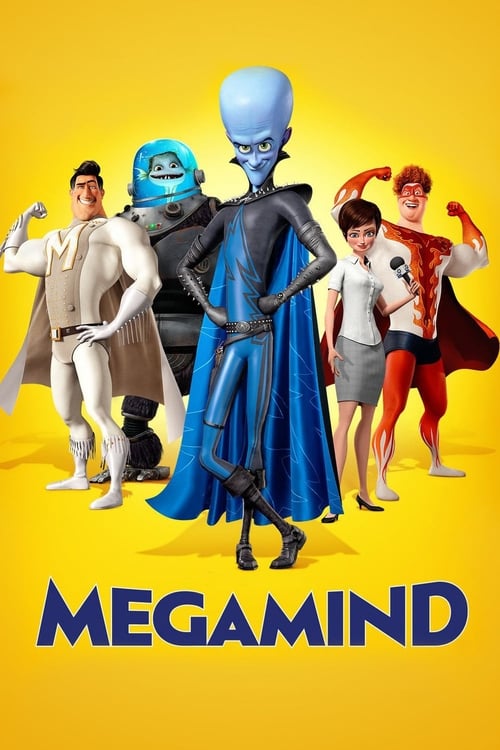
Megamind
Plot
After Megamind, a highly intelligent alien supervillain, defeats his long-time nemesis Metro Man, Megamind creates a new hero to fight, but must act to save the city when his "creation" becomes an even worse villain than he was.
Get the Weekly Woke Watchlist
New and trending movies scored for woke bias, preachy messaging, and forced political themes — before you waste your evening.
No spam. One useful email per week.
Overall Series Review
Categorical Breakdown
The premise suggests a critique of social prejudice, as the blue-skinned alien Megamind is rejected and labeled 'evil' by a society that immediately accepts the privileged, 'good-looking' hero, Metro Man. This frames the narrative through an allegorical lens of 'immutable characteristics' determining a character's fate. However, the film’s ultimate resolution rejects this determinism entirely, concluding that a character’s identity is forged by their moral *choices* and merit, not their origin or appearance. The final antagonist, Tighten, is an entitled and toxic male who embodies a failure of character despite his power.
The institutions of Metro City—the public, the media, and the former hero—are heavily criticized for their shallow celebrity worship and their rigid black-and-white view of morality. Metro Man, the city's celebrated icon, is revealed to be a phony who abandoned his duties. The city itself becomes a symbol of decay when it loses its hero and Megamind takes over. This is a pointed critique of the society's misplaced values, but the film's end celebrates the city's *need* for a protector and Megamind commits to defending it, demonstrating a restoration and appreciation for the civic order rather than civilizational self-hatred.
Roxanne Ritchi, the female lead, is an intelligent, determined investigative reporter. She operates as a moral compass and intellectual equal who actively drives the plot. She is repeatedly put in the position of a damsel-in-distress, but this is a deliberate parody of the superhero genre’s tropes and she remains competent in a crisis. The narrative explicitly vilifies the character of Hal Stewart/Tighten, a male figure driven by sexual entitlement and obsession, framing traditional toxic male behavior as the source of the story’s ultimate villainy. The female role is strong and pivotal but is not a 'Girl Boss' who instantly surpasses all male counterparts.
The core of the movie’s emotional plot revolves around the traditional, monogamous, male-female romantic relationship between Megamind and Roxanne Ritchi. The film's structure is entirely normative. There are no elements of alternative sexual ideology, deconstruction of the nuclear family, or discussion of gender theory present in the narrative.
The movie is a philosophical commentary on existentialism and the meaning of life, not a critique of organized religion. The narrative deconstructs the idea of 'destiny' as a predetermined role, suggesting that meaning must be chosen and created by the individual. While this is a form of philosophical moral relativism at the start, the climax establishes a clear moral law: a destructive, selfish villain must be stopped and lives must be saved. The film’s moral arc moves from a critique of pre-determined roles toward an affirmation of objective good through selfless action.
Get the Weekly Woke Watchlist
New and trending movies scored for woke bias, preachy messaging, and forced political themes — before you waste your evening.
No spam. One useful email per week.