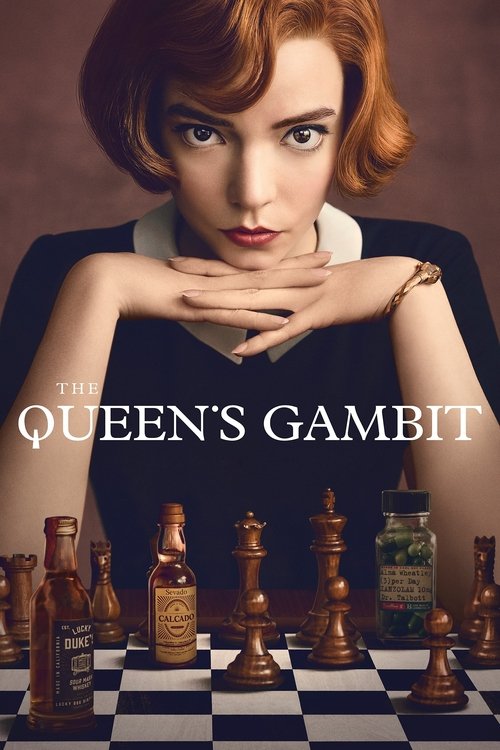
The Queen's Gambit
Season 1 Analysis
Season Overview
No specific overview for this season.
Season Review
Categorical Breakdown
The narrative is driven by individual meritocracy; the protagonist is judged only by her intellectual prowess at chess, not by her race or class. The primary barrier she faces is her gender in a male-dominated sport, which is a historical reality rather than an intersectional lens. The only notable critique is that the primary Black character, Jolene, serves a function-based role as a 'Magical Negro,' appearing late in the series to provide financial and emotional salvation to the white protagonist, with limited development of her own life.
The show offers a critique of mid-century American institutions and societal flaws, such as the neglectful orphanage system that fostered drug addiction and the restrictive social expectations of the era. However, the American system itself is not framed as fundamentally corrupt or racist. The final victory is a patriotic triumph of American individualism against the Soviet collective, a narrative position antithetical to civilizational self-hatred. The Soviet characters are also treated with respect and are shown as fellow artists of the game, not cartoon villains.
The core of the plot involves the protagonist rejecting the traditional path of marriage and domesticity to pursue an elite career, aligning with the 'career is the only fulfillment' trope. Her adoptive mother is depicted as trapped and miserable in the role of a traditional housewife. However, men are not generally portrayed as 'bumbling idiots' or toxic; her male competitors become respectful allies, friends, and mentors who willingly support her in her final match against the Russian World Champion. The protagonist is a flawed genius, not a perfect 'Mary Sue,' as she struggles with severe addiction.
The story takes place in the 1950s and 60s and focuses exclusively on the heterosexual relationships and dynamics of the time. There is no presence of sexual ideology, no overt centering of alternative sexualities, and no explicit deconstruction of the nuclear family based on queer theory. The dysfunctional families in the show are portrayed as such due to personal failure, addiction, and neglect, not ideological reasons.
The series operates primarily in a secular, individualistic moral framework. The morality of the story is transcendent in the sense of overcoming personal demons (addiction) and striving for excellence, but it is not connected to a higher moral law or faith. Religion is briefly present at the orphanage as a form of enforced conformity, but it is neither a source of strength nor is it actively villainized or blamed as the root of evil. The narrative maintains a neutral spiritual vacuum.