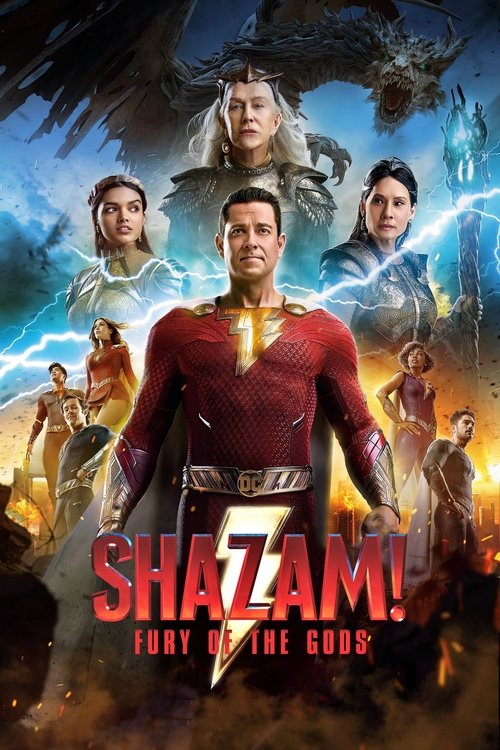
Shazam! Fury of the Gods
Plot
Billy Batson and his foster siblings, who transform into superheroes by saying "Shazam!", are forced to get back into action and fight the Daughters of Atlas, who they must stop from using a weapon that could destroy the world.
Get the Weekly Woke Watchlist
New and trending movies scored for woke bias, preachy messaging, and forced political themes — before you waste your evening.
No spam. One useful email per week.
Overall Series Review
Categorical Breakdown
The hero's foster family is intentionally diverse, featuring different races and physical abilities, but the plot's focus is on universal themes of belonging and earning worth rather than lecturing on systemic oppression. Characters are judged by their integrity and loyalty to the family, not immutable characteristics. The diverse casting is integrated into the pre-existing foster family concept from the first film.
The central message celebrates the family unit as the foundation of strength and the protective element against outside chaos. The film portrays the adopted home and modern city as worth saving from the destructive desires of the ancient Greek gods. The foster mother's unconditional love and reassurance directly counter the protagonist's fear of abandonment, reinforcing the institution of family.
The antagonists are the Daughters of Atlas, three powerful female deities who drive the main conflict, showcasing a prominent 'Girl Boss' villain dynamic. However, the male hero is not emasculated; his character arc is about overcoming his own insecurity and embracing his leadership role. The film strongly celebrates the foster parents, particularly the mother, as the moral and emotional anchor of the entire superhero team, which counters anti-natal or anti-family messaging.
The character Pedro Peña has a brief, explicit coming-out scene where he declares he is gay to his family, who immediately respond with total acceptance, stating they already knew. This dialogue is a small, non-essential scene that explicitly inserts sexual ideology into the narrative and is acknowledged by the writer as a deliberate push for representation, though the main plot does not revolve around his sexuality.
The entire mythological premise of the film establishes the ancient Greek gods as factual, powerful beings, which inherently supplants other religious belief systems. The film includes dialogue that suggests other religions, including Christianity, are wrong. A positive, traditional religious element (the foster father's dinner prayer) present in the previous film is notably absent. This framework promotes a subjective, pagan-centric spiritual worldview over transcendent morality.
Get the Weekly Woke Watchlist
New and trending movies scored for woke bias, preachy messaging, and forced political themes — before you waste your evening.
No spam. One useful email per week.