What If...?
Season 1 Analysis
Season Overview
No specific overview for this season.
Season Review
Categorical Breakdown
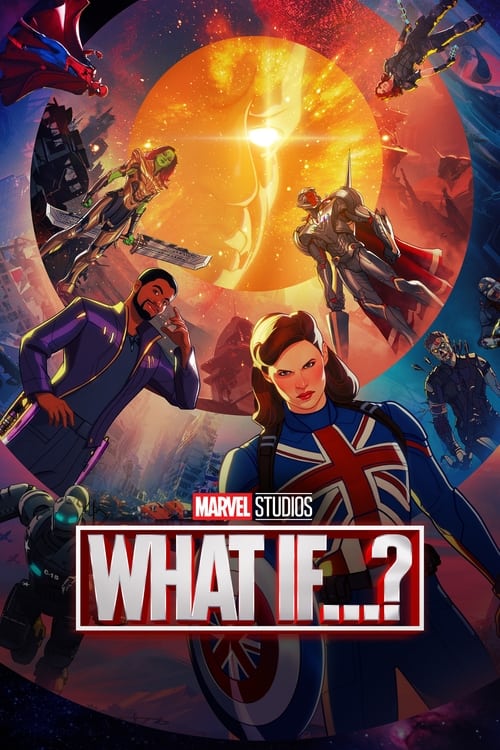
The core premise of several episodes involves a direct 'race-swap' or 'gender-swap' of a foundational character, such as Peggy Carter receiving the Super-Soldier Serum instead of Steve Rogers, and T'Challa becoming Star-Lord instead of Peter Quill. These changes elevate female and minority characters into roles of supremacy over the original white male counterparts, which is explicitly framed as an improvement. The episode 'What If... T'Challa Became a Star-Lord?' in particular portrays T'Challa as a universally benevolent figure, contrasted by commentators with the 'selfish, stupid and white Peter Quill', fulfilling the criteria of a high score.
The show does not explicitly demonize Western civilization or its ancestors. The primary conflicts remain global threats like Nazis, Ultron, or galactic villains. Any critique of the West is limited to internal social failings, such as the initial skepticism Peggy Carter faces from the male-dominated military hierarchy, which is criticism of a system, not a broad condemnation of the entire civilization.
The inaugural episode establishes Captain Carter as a 'Girl Boss' who immediately excels in her role, forcing an old-world, male-dominated military to submit to her capabilities. The narrative features condescending male military figures who are proven wrong and made to appear small-minded in the face of female competence. This emphasis on the new, perfect female lead replacing and surpassing the male original scores highly on the 'Girl Boss' trope scale.
The season contains no explicit or overt storylines, characters, or dialogue that center alternative sexualities, deconstruct the nuclear family, or promote gender ideology. The focus remains strictly on action, alternate history, and science fiction concepts.
The conflicts are focused on the secular, multiversal concepts of free will, fate, power, and consequences, as seen with Doctor Strange's descent into a power-hungry sorcerer. The series is consistent with the broader MCU's pantheon of 'gods' being powerful alien beings. There is no direct hostility toward traditional religion, Christianity, or promotion of moral relativism beyond the standard secular context of the genre.