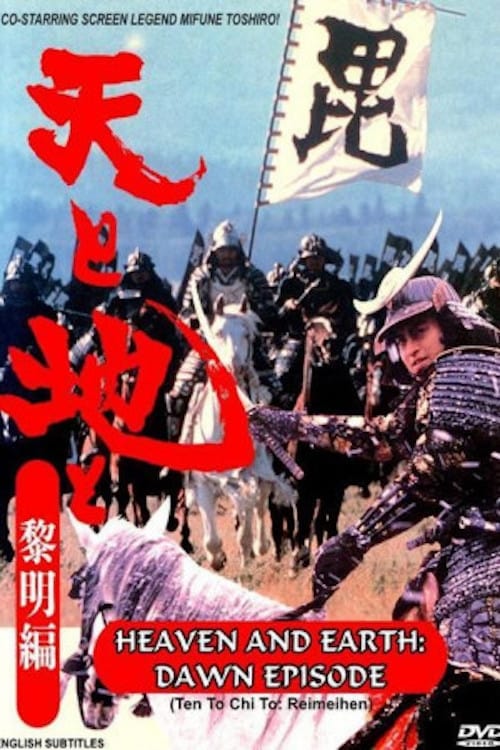
Heaven and Earth: Dawn Episode
Plot
Some of the greatest battles during the Age of Civil Wars were fought between the Uesugi and Takeda clans. Leading up to them was the incredible life of Uesugi Kenshin, who rose from a son out of favor with his...
Get the Weekly Woke Watchlist
New and trending movies scored for woke bias, preachy messaging, and forced political themes — before you waste your evening.
No spam. One useful email per week.
Overall Series Review
Categorical Breakdown
The story centers on a historical conflict between two Japanese warlords, focusing on their honor, ambition, and strategic merit rather than race or intersectional identity. The casting is historically and culturally authentic to 16th-century Japan, offering a universal examination of leadership and war.
The film functions as a celebration of a major period in Japanese history, with an emphasis on authentic, detailed recreation of the era’s culture, architecture, and costumes. The protagonist’s motivation is purely to protect his home province and people, framing the institutions of the region as a shield against chaos.
The core of the narrative is defined by the military and political rivalry between two male warlords. Female characters, such as Kagetora's love interest and an enemy woman warrior, are secondary figures who operate within the strict traditional gender roles of the feudal setting. The focus remains on protective masculinity and martial vitality.
The narrative is completely dominated by the political and military conflict of the Sengoku era. Sexual identity or alternative sexualities are not centered, and the film does not engage with modern gender theory or deconstruct the traditional male-female pairings of the period.
The main character, Uesugi Kenshin, is historically known for his deep Buddhist faith, and the film references his piety, including a promise to the Buddha that influences his personal life. Faith and honor are a source of moral struggle and strength, not a force of bigotry or evil, affirming a transcendent moral framework for the protagonist’s actions.
Get the Weekly Woke Watchlist
New and trending movies scored for woke bias, preachy messaging, and forced political themes — before you waste your evening.
No spam. One useful email per week.