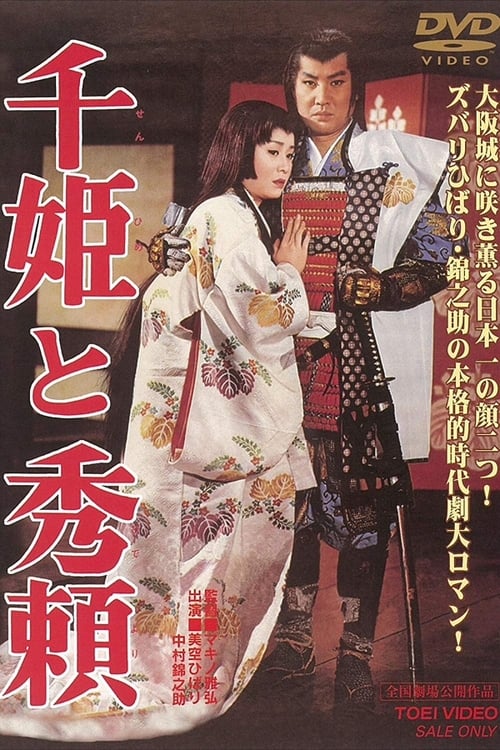
Lady Sen and Hideyori
Plot
From the late 1500's through the founding of the Tokugawa Shogunate many battles were fought as the great warlords vied for power over the nation. Princess Sen, a daughter of Tokugawa Ieyasu, is caught amidst the family feud between the Tokugawa and Toyotomi families. When her father Lord Tokugawa Ieyasu attacks her husband Toyotomi Hideyori's castle, her life takes a sudden turn for the worse. Will she ever find peace in her life again? One of Hibari Misora's most memorable performances, a movie you will never forget!
Get the Weekly Woke Watchlist
New and trending movies scored for woke bias, preachy messaging, and forced political themes — before you waste your evening.
No spam. One useful email per week.
Overall Series Review
Categorical Breakdown
Characters are all Japanese and the conflict is rooted in a purely Japanese feudal power struggle. The narrative does not utilize an intersectional lens, nor is there any commentary on race or 'whiteness,' as the setting is historically authentic with Japanese actors.
The film is a Japanese production about Japanese history and culture. Hostility is directed at the feudal system and the political ancestors (Tokugawa family) who start the war, not Western civilization, which is outside the scope of the narrative's concern. The focus is entirely internal to the Japanese nation and its history.
The female lead's central dramatic arc is framed as a direct 'resistance to the entrenched patriarchy' where her powerful father and grandfather are considered 'natural enemies.' She commits acts of murder in a deliberate attempt to blacken her family's name and rebuke her 'misuse' by the system. This 'transgressive femininity' directly counters the historical marginalization of women, aligning closely with the spirit of the 'Anti-Natalism' and 'Girl Boss' tropes through anti-patriarchal rebellion, even if the ending is a spiritual retreat.
The narrative centers entirely on a traditional, though politically arranged, male-female marriage and the subsequent tragedy of that pairing. There is no presence of alternative sexual ideology, gender theory, or deconstruction of the nuclear family structure.
The main character briefly embraces a subjective 'evil' morality and commits a murder spree as a form of political protest. However, the story ultimately resolves with her retreat to a Buddhist temple to become a nun, which depicts a transcendent, religious moral structure as the final, stabilizing destination.
Get the Weekly Woke Watchlist
New and trending movies scored for woke bias, preachy messaging, and forced political themes — before you waste your evening.
No spam. One useful email per week.