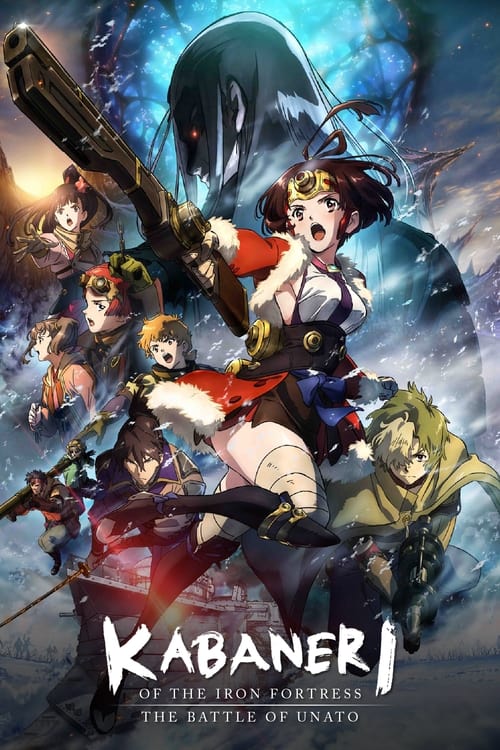
Kabaneri of the Iron Fortress: The Battle of Unato
Plot
In the midst of an industrial revolution, the people of Hinomoto fight hordes of undead creatures, known as Kabane, using powerful armored trains. Half a year after the events of the original TV series, the heroes of the Iron Fortress attempt to take back Unato Castle.
Get the Weekly Woke Watchlist
New and trending movies scored for woke bias, preachy messaging, and forced political themes — before you waste your evening.
No spam. One useful email per week.
Overall Series Review
Categorical Breakdown
The narrative's central division is between humans, Kabaneri (human-Kabane hybrids), and the monstrous Kabane, which is a biological/existential conflict, not a racial one. All core characters are ethnically Japanese within the world of Hinomoto. Character value is based on merit, such as the male lead's engineering skill and the female lead's combat ability, not on any intersectional hierarchy. The political conflict is internal, revolving around military strategy and mistrust, not systemic oppression or vilification of any ethnic group.
The entire plot centers on the heroes of the Iron Fortress joining a coalition to reclaim a lost home, Unato Castle, from the undead. The civilization, portrayed with a distinct Japanese and steampunk-samurai aesthetic, is something to be defended and restored, not denigrated. The effort is one of civilizational self-preservation against an existential threat, showing gratitude for the nation's fortified stations and their technology.
The female lead, Mumei, is a fearsome, gun-wielding warrior who is constantly kicking serious ass, which borders on the 'Girl Boss' trope. However, she is explicitly not a 'Mary Sue,' as her emotional arc is central to the plot, focusing on her relationship with the male lead and choosing community over ruthless efficiency. Other women occupy varied and complementary roles, including engineer, leader, and caretaker, demonstrating vitality without emasculating the male lead, Ikoma, who is a heroic inventor and fighter.
There is a complete absence of LGBTQ+ themes, characters, or ideology. The relationship focus of the plot is on the traditional, romantic pairing and evolving bond between the male lead Ikoma and the female lead Mumei. The setting maintains a normative structure where sexuality is not a centerpiece of identity or political commentary.
The narrative is focused on a physical, apocalyptic battle against undead creatures using technology. There are no religious institutions, figures, or explicit spiritual themes presented in the central conflict or as a source of virtue or villainy. The morality is driven by the clear objective truth of survival against a literal monster horde, without deconstruction toward moral relativism.
Get the Weekly Woke Watchlist
New and trending movies scored for woke bias, preachy messaging, and forced political themes — before you waste your evening.
No spam. One useful email per week.