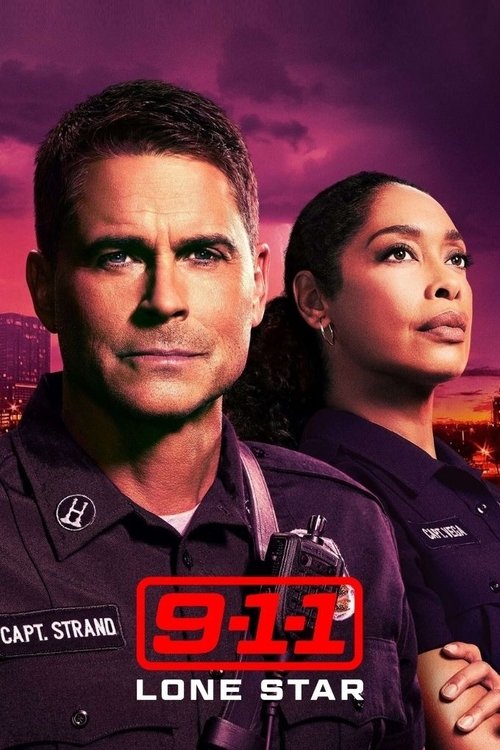
9-1-1: Lone Star
Season 2 Analysis
Season Overview
As Capt. Owen Strand welcomes newcomer Captain Tommy Vega to the 126, he must face the unexpected arrival of his ex-wife, Gwyneth, who visits Austin to check on their firefighter son, T.K., following the injuries he sustained at the end of last season. All of this occurs as the rescue squad must deal with an emergency that the Texas capital has never encountered before.
Season Review
Categorical Breakdown
The ensemble cast is constructed based on a strict intersectional hierarchy. Characters like Paul, Marjan, and Mateo are defined by their status as trans, Muslim, or DACA recipients. Plotlines frequently revolve around systemic oppression and the need for diversity, rather than the merit of the firefighters as a unit.
The show treats the traditional culture of Texas as something to be corrected or transcended. While it respects the uniform, it often frames historical or conservative viewpoints as obstacles to progress. The heroes are depicted as an enlightened 'other' compared to the broader, supposedly less tolerant community.
Tommy Vega is introduced as a 'Girl Boss' archetype who effortlessly balances command and family life, often making better decisions than her male peers. Female characters are portrayed as hyper-competent and emotionally superior, while the men are frequently shown as vulnerable, neurotic, or in need of female guidance.
Queer Theory is central to the show's DNA. The relationship between T.K. and Carlos is a primary narrative focus, and Paul’s identity as a trans man is a recurring plot point. Biological reality is treated as secondary to gender identity, and the show serves as a platform for normalizing radical gender transitions.
While the show includes a Muslim character, her faith is presented through a secular-progressive lens. Traditional Christian values are largely ignored or replaced by moral relativism. Strength is found in 'living one's truth' rather than in objective spiritual laws or traditional religious institutions.